.

.
Mostrando postagens com marcador King Crimson. Mostrar todas as postagens

01/05/2020

Robert Fripp (King Crimson) lança série de quarentena “Music for Quiet Moments” (vídeo)


1 - Pastorale (Mendoza 3rd Jun 2007)


Robert Fripp é uma verdadeira lenda viva da música, em especial por seu trabalho gigante com o King Crimson e por estar na linha de frente da inovação musical há anos.

O viés experimental de Fripp não poderia ficar quieto durante esses tempos de quarentena, e ele resolveu dar início a um novo projeto intitulado Music for Quiet Moments. Prometendo lançamentos todas as sextas-feiras em todas as plataformas de streaming  (inclusive YouTube, vídeo acima), o guitarrista diz que o projeto irá alternar entre canções “introspectivas, reflexivas” e “extrovertidas, com afirmações”, passando ainda por algumas que “não vão a lugar nenhum, só estão onde estão”.

Robert Fripp e Music for Quiet Moments


Abaixo, você confere a nota oficial completa do músico (via CoS):


Música para Momentos Quietos…

I
Um Momento Quieto é como nós vivemos um momento: o momento que está aqui, agora e disponível.

Momentos quietos são quando nós separamos um tempo para ficar quietos;
e também onde nós os encontramos.
Às vezes os momentos quietos nos encontram.

Alguns lugares têm um espírito íntimo, onde a quietude é uma característica do espaço:
talvez características naturais da paisagem;
talvez criadas intencionalmente, como em um jardim;
talvez onde um espírito do lugar tenha passado a existir com o tempo, como em um cemitério no interior da Inglaterra.

A quietude pode ser vivida com o som, e também através do som;
em um lugar que consideramos sagrado, talvez em um vagão de metrô lotado indo de forma apressada à Piccadilly ou à Times Square.

Um Momento Quieto tem mais a ver com como nós vivemos o tempo do que como nós vivemos o som.

Um Momento Quieto prepara o espaço no qual o Silêncio pode entrar.

O Silêncio é atemporal.

II
Meus próprios momentos quietos, durante cinquenta e um anos sendo um músico em turnê, foram majoritariamente em lugares públicos onde, cada vez mais, uma camada de barulho foi intencionalmente sobreposta e saturada no ambiente sônico.

III
Momentos Quietos da minha vida musical, expressos em Paisagens Sonoras, são profundamente pessoais; ainda totalmente impessoais: eles dizem respeito às preocupações que dividimos com nossa humanidade em comum.

Paradoxalmente, eles majoritariamente acontecem em contextos públicos hostis e longe da quietude.

Algumas dessas Paisagens Sonoras são introspectivas, reflexivas.
Algumas são extrovertidas, com afirmações.
Algumas não vão a lugar nenhum, simplesmente estando onde estão.


Robert Fripp
Terça-feira 28 de Abril de 2020
Brendonborough, Inglaterra Central


19/10/2019

King Crimson: Live In Newcastle, December 8, 1972 (CLUB48) FLAC


Sem sombra de dúvida uma excelente notícia este lançamento da Discipline Global Mobile na série The King Crimson Collectors' Club, tantos anos depois.

Foi o primeiro show do King Crimson já assistido pelo escritor e biógrafo da banda Sid Smith. Ele comenta que o público estava bastante satisfeito em ouvir material desconhecido e respondeu com entusiasmo ao desafio apresentado.

Smith ainda observa sobre esta gravação: “Se essa fita estivesse disponível por ocasião da edição do box set de "Larks 'Tongues In Aspic: The Complete Recordings" 40th Anniversary Series com 15 discos, não tenho absolutamente nenhuma dúvida de que esse show teria sido a joia dessa coroa em particular. Exemplos de boa qualidade com o quinteto da era Muir são tão raros e distantes entre si, que uma fita de mesa de som como essa é realmente um achado precioso.”

Ele está sobremaneira correto, é o melhor registro ao vivo no curto período de tempo de Jamie Muir com essa formação, e, é aí que a mágica realmente reside. Isto é um verdadeiro presente dos deuses do rock progressivo. Gravado sem nenhuma expectativa de que seria usado além de, possivelmente, por um membro da banda que quisesse verificar um elemento da apresentação de uma noite anterior, a fita de um show ao vivo, não tocado desde 1972 e ainda, tão emocionante por tudo que representa, surge do nada apenas agora em 2019. Ao que se sabe, no final de 2017, um ex-membro da equipe entregou uma fita ao gerente da banda em uma festa. Ele não tinha certeza se estava no arquivo do DGM...

King Crimson tocava com confiança o material que comporia, na maior parte, o clássico álbum "Larks 'Tongues in Aspic" - realizado quase na íntegra e, exceto as maravilhosas improvisações, na ordem de execução que surgiria em vinil no início de 1973 e que é considerado um dos grandes clássicos da banda.

O site oficial do King Crimson, DGM Live, através do próprio Sid Smith, destacou a resenha de John Kelman do canal especializado All About Jazz, que dentre outras coisas enaltece este formidável registro por sua qualidade impar e o que ele representa: "Agora, com o melhor som de gravação ao vivo até hoje, o Live in Newcastle, em 8 de dezembro de 1972, elucida ainda mais a importância inestimável de Muir nesse conjunto, nos deixando apenas uma pergunta: para onde esse grupo teria ido se Muir tivesse decidido não sair?" (Confira abaixo a integra da matéria de John Kelman)

Boa audição! 


King Crimson
Live In Newcastle, December 8, 1972
Discipline Global Mobile/Panegyric
Série: The King Crimson Collectors' Club ‎– CLUB48 


Tracklist

1. Larks' Tongues In Aspic Part One 10:47
2. RF Announcement 1:09
3. Book Of Saturday (Daily Games) 2:49
4. Improv I 14:49
5. Exiles 6:20
6. Easy Money 9:33
7. Improv II 17:28
8. The Talking Drum 5:49
9. Larks' Tongues In Aspic Part Two 3:47


​​David Cross - Bill Bruford - Jamie Muir - John Wetton - Robert Fripp


All About Jazz
By John Kelman
April 19, 2019

"Never say never," or so the old adage goes. When it comes to music, there are two more that should be added: "farewell tour" and, most certainly as it relates to King Crimson's Live in Newcastle, December 8, 1972, "the complete recordings." This, the 48th in the veteran group's King Crimson Collector's Club series of archival releases, turns out not just to be an unexpected addition to the group's Larks' Tongues in Aspic (Panegyric), but belies that fifteen-disc, 2012 40th Anniversary Series box set, which was subtitled "The Complete Recordings" on the opening page of its enclosed 36-page booklet.

But it's a minor quibble. The truth is, this five-piece version of a brand new lineup, making its first public appearance just two months prior on October 13, 1972 and its last a mere five months later, was King Crimson's second shortest-lived incarnation next to the 2008 twin-drummer lineup (which performed a mere eleven dates in four cities, leaving no studio recordings and, effectively, no new music).

The remaining members of the Larks' Tongues band continued as a quartet for another fifteen months before being summarily shut down in September, 1974 by the group's only remaining co-founder, guitarist Robert Fripp, following the recording of King Crimson's final studio album of the '70s, Red (Island, 1974, reissued Panegyric, 2009). But with only seven live recordings from the quintet's 46 concerts included in the 40th Anniversary Series box (plus a very poor quality bonus eighth as a download), and a full five of those seven shows sourced from audience bootlegs, it's terrific news, indeed, that the band, still road-testing its new material in the final months of 1972, was in the habit of making cassette recordings off of the soundboard. Far from the high fidelity possible today, these soundboard recordings were, nevertheless, of sufficient quality to allow the band to continue honing its new repertoire prior to going into the studio.

Live in Newcastle, December 8, 1972 is, indeed, a major find: a soundboard recording that's a major addition to the documented legacy of this short-lived five-piece lineup that, alongside Fripp, ex-Yes drummer Bill Bruford, ex-Family bassist/vocalist John Wetton and violinist David Cross, featured the fur vest-clothed, blood capsule-spewing and inimitably creative percussionist, Jamie Muir. Exceptionally well-restored, it reveals a great deal more about just how extraordinary this band was, even if only for such a short time.

Muir left King Crimson after its March 31, 1973 show, a mere eight days after the release of Larks' Tongues in Aspic (Island Records, 1973). While the four-piece formation that remained would prove to be amongst the band's most-loved (until, that is, its current, slightly shifting format, which has been touring since 2014), recordings from the full quintet remain amongst the holiest of Crimson holy grails.

Percussion [Percussion & Allsorts] – Jamie Muir

And for good reason. As superb as the Larks' Tongues quartet would ultimately prove to be in performance (and as well-documented, generally from much better sources, on two mega-box sets from Panegyric in 2013 and 2014 respectively, The Road to Red and Starless), Muir brought not just a visual "X factor" to the group but a musical one as well, his not-to-be understated contributions during his brief tenure with Crimson still felt well after his departure, with the percussionist exerting a lasting influence on Bruford, who added the role of percussionist to his extant position as the group's drummer after Muir's departure.

Live in Newcastle, December 8, 1972 stands out amongst the relatively few recordings from the Larks' Tongues quintet.

First, while still a relatively low-fi recording (call it "mid-fi," perhaps), it's still the best-sounding live recording from this group to date, with surprising clarity and delineation, given its source and age.

Second, it's the only known recording—barring the Hull Technical College date from November 10, 1972, included in the 40th Anniversary Series box—that features the entire Larks' Tongues in Aspic album in its running order, albeit with an incomplete version of the set-closing "Larks' Tongues in Aspic Part Two," which cuts off about halfway through.

Along with every track from Larks' Tongues in Aspic, two lengthy improvisations demonstrate the group's ability to draw music from the ether while, at the same time, connecting one song to the next. The first is embedded between a particularly lovely version of the miniature vocal piece, "Book of Saturday," and the powerfully symphonic "Exiles." The second is bookended by a lengthier, nine minute-plus look at the album's most eminently rocking "Easy Money" and the whisper-to-a-roar, improv-heavy "The Talking Drum," which segues into an incomplete "Larks' Tongues in Aspic Part Two," rendering the set almost completely continuous, barring a brief break for Fripp's announcement after the set-opening "Larks' Tongues in Aspic Part One" and another (with no announcement) following "Exiles."

Together, these two improvisations occupy 32 minutes of the CD's 72-minute run time, and demonstrate this quintet's far freer approach to extemporization, again largely thanks to Muir, who'd already established himself in the British free jazz scene, collaborating with guitarist Derek Bailey, electronics specialist Hugh Davies, saxophonist Evan Parker and vocalist Christine Jeffrey in the Music Improvisation Company, whose sole, eponymous album was released by a nascent ECM Records in 1970.

Guitar, Mellotron – Robert Fripp

Road-testing the emerging album's worth of material over a full 32 live performances before committing it to tape for Larks' Tongues in Aspic, the group was still working on nailing down formats and arrangements even at the relatively late date of Live in Newcastle, December 8, 1972, its sixth-to-last show before heading into the studio for two months in early '72. But it was inching closer and closer.

The out-of-the-gate game-changing "Larks' Tongues in Aspic Part One"—its introduction bringing Muir's bells and other percussion together with guitar and violin harmonics, and Bruford's textural cymbal work—has largely been whipped into shape by this time, but Fripp is still looking for just the right mix of compositional construction and improvisational forays. The technically challenging, rapid-picked and angularly conceived guitar part first introduced during the third section of this eleven-minute, episodic blend of crunching, metallic power chords, pastoral violin passages and many other ideas in-between, is repeated, here, during the following passage before heading off into more spontaneous territory. This contrasts with the studio version, where the guitarist overlays an intensifying build of increasingly rapid-strummed chords, a logical extension and expansion of the similar technique used during Fripp's now-iconic, skewed banjo-inflected guitar solo during "Sailor's Tale," from Islands (Island, 1971, reissued Panegyric, 2010).


It's an incendiary reading of the composition that seems to effortlessly shift from subtle delicacies to ear-bursting grooves, the latter driven hard by Wetton's heavily distorted, positively massive bass lines, Bruford's instantly recognizable snare and Muir's reckless percussive contributions. The album's start-stop introduction to Cross' delicately oblique, largely a cappella solo has yet to emerge at this point, though the violinist's feature, which turns into a duet with Muir, is closer to but, in the spirit of improvisation that underscores virtually the entire performance, still not a precise mirror of what would ultimately appear on the studio recording. Here, Muir's cascading, harp-like dulcimer strums gradually join with Cross for the simple, Oriental-sounding melody that signals the composition's final section, as it gradually builds towards the familiar, climactic conclusion.

Violin, Flute, Mellotron – David Cross

It may be a brief announcement at just over a minute, but before launching into "Book of Saturday" (still, at this point, titled "Daily Games," and delivered with both pastoral beauty and a hint of melancholy) Fripp takes the time to compliment the Newcastle audience, introduce what came before and what is to come next as the group "proceed[s] to attack culture yet again," following "a small demonstration of Mellotron tuning," and how the set will conclude. At the same time, Fripp is compelled to draw attention to a rather vocal member of the audience, thankfully inaudible in this recording.

This may have been relatively early days in the group's half century existence, but Fripp was already drawing a line in the sand with respect to how an audience can either inspire or distract. "My, my, what a nice crowd they have in Newcastle," his cadential remarks begin, before turning more pointed. "To the gentlemen who so kindly passed those killingly funny remarks at the beginning, may I say thank you sir, you're really a scream," Fripp gently yet acerbically adds, before concluding his introduction with: "To the gentleman with the loud voice: your indulgence sir, thank you." It's a relatively small but telling decision to include this introduction, as it could just as easily have been edited out.

But back to the music. As the under three minute "Book of Saturday"—with Wetton's first vocal of the set and Fripp's beautifully arpeggiated solo—reaches its conclusion, it segues seamlessly into "Improv I." Beginning as a lovely, melodic feature driven by Bruford's soft kit work and Muir's fluid yet unpredictable percussion injections, Fripp's lyrical, clean-toned playing is augmented by Wetton's blend of rhythmic anchor and melodic foil. Cross improvises, too, but largely in the background, though it's impossible to know whether this is by intent or the result of the front-of-house mix and where the recorder was in the hall.

The three-chord set of changes that spontaneously emerge gradually lead to an accelerating bass solo that reveals Wetton as a fine bassist for the group, albeit one with a more limited vernacular as compared to Fripp, Cross and, even, Muir, when he is employing tuned percussion like xylophone or wood blocks. As the tempo slows again, Fripp introduces the silkily sustaining tone he first unleashed on the world during his fiery solo on "21st Century Schizoid Man," the opening track to King Crimson's (music) world-changing debut, In the Court of the Crimson King (Island, 1969, reissued Panegyric, 2009).

Slowly morphing into a backbeat-driven, xylophone-colored and wah wah-heavy solo from Cross that again accelerates in tempo, as Fripp engages with Cross with greater virtuosity, the 14-minute improvisation builds climactically and yet, in its final minute, dissolves as it magically finds its way to the intro of "Exiles," where Wetton, not always the most pitch-accurate of singers, delivers a particularly compelling vocal performance.

With Crimson's earlier albums, also including In the Wake of Poseidon (Island, 1970, reissued Panegyric, 2010) and Lizard (Island, 1971, reissued Panegyric, 2009), strongly featuring Mellotron, it's no small significance that "Exiles" is the first tune on Larks' Tongues in Aspic (and, for that matter, Live in Newcastle, December 8, 1972) to utilize the tape-loop driven keyboard instrument that allowed the group to incorporate a breadth of symphonic sounds.

Drums - Bill Bruford

Also features significantly on "Easy Money," but not until Fripp's lengthy solo section, with Cross' keyboard work supporting the guitarist's gradually expanding, intervallic-leaping and, at times, blues-informed phrases. The instrumental section, nearly three minutes longer than the studio version, also demonstrates how much Muir brings to the group, as he layers all manner of percussion instruments and "allsorts" (meaning: just about anything he could find capable of being shaken, swirled, struck or dropped) over Bruford's unshakable anchor with, again, the deeply intuitive sounds of surprise. As ever, Muir both responds to and further encourages Fripp and the entire group as it builds to a high-volume peak that's brought back to the final verse by Wetton's (unfortunately) pitchy scatting.

The 17-minute improvisation that follows quickly dissolves into a solo feature for Muir, who employs everything from, amongst many other things, drum kit, horns, spinning toys and swinging chains to strange laughs, a large metal sheet and all manner of tuned metal and wood. A drum solo follows, but is clearly still Muir in its complete and utter abandon, though Bruford begins to join in, as does Wetton, first with a repeating two-chord phrase but, ultimately, greater freedom as both Cross and Fripp engage in some unanticipated Mellotron interplay, Cross soon moving to violin as the entire band takes off with an accelerating pulse.

Building to the kind of funk-heavy groove that often defined many later quartet improvisations, "Improv II" continues to demonstrate the Larks' Tongues quintet's greater volatility, its sheer capriciousness an immutably defining quality. The previous Islands touring band was often defined by similar free exchanges, but between Muir and Fripp's broader language and their connection to the British free jazz scene—the guitarist recruiting a number of free jazz guests on the Crimson trifecta of Poseidon through Islands while producing, amongst others, Keith Tippett's massive ensemble project Centipede and its two-LP Septober Energy (Neon, 1971), as well as the pianist's more intimate but still unfettered Blueprint (RCA, 1972)—this lineup far outpaced any other Crimson lineup (including the subsequent quartet) when it came to astonishing and impossible to anticipate states of change. Only the current lineup, as different as it is, approaches the Larks' Tongues in Aspic quintet in terms of both consistent excellence and, albeit in a subtler fashion, improvisational/interpretive strength.

With Muir's odd vocalizing, from growls and grunts to howls and yowls, bringing "Improv II" to a near-whisper, the piece segues into "The Talking Drum," The percussionist's hand-drumming setting the pace for Wetton to gradually assume the instrumental's familiar bass line. "The Talking Drum" is almost two minutes shorter than the ultimate studio version, but still manages to build to the searing conclusion of melded violin harmonics and guitar screeches that segue into the anthemic instrumental, "Larks' Tongues in Aspic Part Two."

While plenty energetic, the only shame about Live in Newcastle, December 8, 1972 is that "Larks' Tongues in Aspic Part Two" cuts off right before Cross' solo. Still, the familiar crunch of Fripp's overdriven guitar defines both the "A" section's higher volume and shifting meters and the "B" section's brief respite, before it builds back to fierier energy.

Bass Guitar, Vocals – John Wetton

Muir's protean contributions are, once again, a demonstration of this group's greater extemporaneous versatility and improvisational élan. If anything, Live in Newcastle, December 8, 1972 is the best example, to date, of why this particular Crimson lineup is held in such high esteem by so many fans. While completely different than the four albums that came before, Larks' Tongues in Aspic, and the profound chemistry of the five musicians that created it, may represent a more consistently visible demonstration of Fripp's growing prowess as a guitarist.

While any real examination of the King Crimson's first four albums reveal a guitarist already extended well beyond the limitations of most guitarists connected to the rock world, Larks' Tongues in Aspic and its follow-up, Starless and Bible Black (Island, 1974, reissued Panegyric, 2011) and the mind-boggling closer that still challenges even the most accomplished six-stringers with "Fracture," render crystal clear that Fripp was, even at this relatively early stage in his career, a guitarist occupying a rarefied stratum alongside precious few others.

But as much as Larks' Tongues in Aspic was a clear revelation of Fripp's eminently impressive yet still-evolving talents as guitarist, composer, conceptualist and bandleader, it was the profound chemistry of everyone involved that made it such an artistic (if, at the time, not entirely commercial or critical) success. Still, it was Muir's relentless "X factor" that made the studio album what it is. Now, with the best sounding live recording to date, Live in Newcastle, December 8, 1972 further elucidates Muir's inestimable importance in this nascent ensemble. The quartet would go on to extensive touring and a reputation as one of King Crimson's best lineups, with Live in Newcastle, December 8, 1972 leaving but one question: where might this group had gone had Muir decided not to leave?

It's an absolutely essential addition to King Crimson's expanded discography of live recordings released since Fripp first curated and issued the four-disc box set of performances by the Larks' Tongues quartet, The Great Deceiver (Virgin, 1992, reissued DGM Live, 2006). But, just as importantly, King Crimson's staggering quintet performance on Live in Newcastle, December 8, 1972 suggests that the phrase "the complete recordings" can often be incorrect...and, here, in the most superbly glorious way possible.

Track Listing: Larks’ Tongues in Aspic Part One; RF Announcement; Book of Saturday; Improv I; Exiles; Easy Money; Improv II; The Talking Drum; Larks’ Tongues in Aspic Part Two.

Personnel: Bill Bruford: drums; David Cross: violin, mellotron; Robert Fripp: guitar, mellotron; Jamie Muir: percussion, drums, "allsorts"; John Wetton: bass, vocals.

Title: Live in Newcastle, December 8, 1972 | Year Released: 2019 | Record Label: DGM Live


FLAC
ulozto.net - (378 MB)
ou
filefactory - (360.88 MB)

11/10/2019

Como a obra-prima de King Crimson liderou uma geração ao 'The Dark Side of the Moon' do Pink Floyd


 'In the Court of Crimson King'  


Lançado há 50 anos, em 10 de outubro de 1969, o álbum ‘In the Court of the Crimson King’ inspirou bandas como Yes e Pink Floyd.


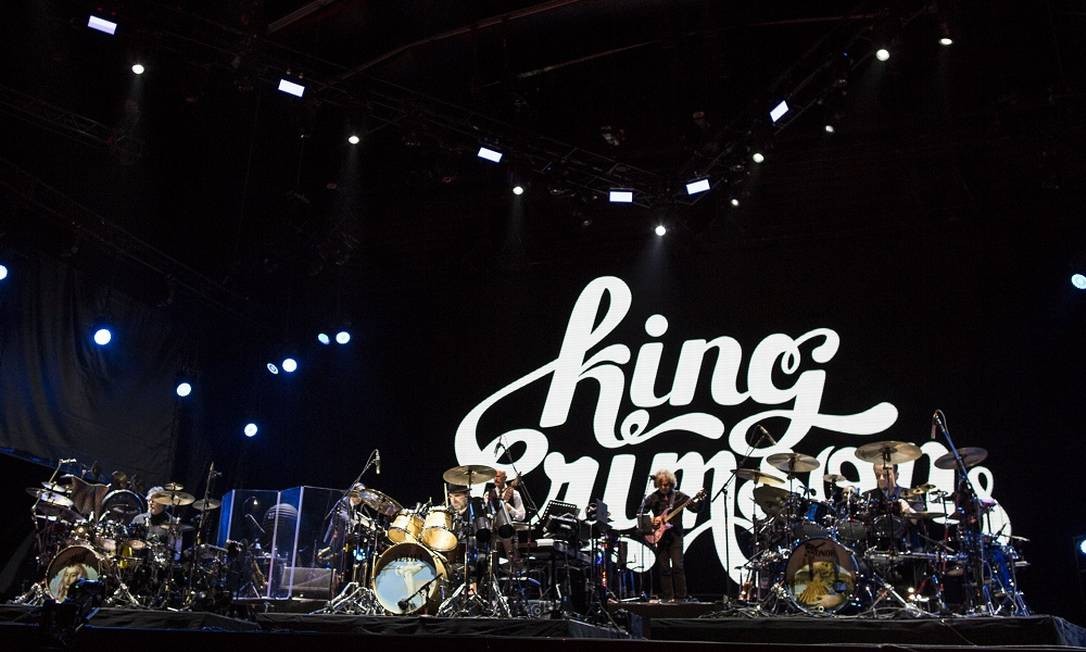
Show da banda King Crimson no Rock in Rio 2019 


Resultado de imagem para Ian Macdonald, membro fundador do King CrimsonIan Macdonald, membro fundador do King Crimson e multi-instrumentista (tocou flauta, sax e teclados no disco de estreia do grupo), contou ao jornal "The Independent" que o álbum "mudou completamente o jogo" da época. "Eu sequer conseguia definir o que havíamos acabado de criar", disse ele, que compôs boa parte das oito faixas de "In the Court of the Crimson King". "Nunca pensamos nesse disco como rock progressivo. Esse termo me faz rir, porque ele sequer estava sendo usado na época."

LONDRES — Cinquenta anos atrás, em Londres, todo mundo que se interessava em música estava falando sobre uma extraordinária banda nova. Eles ainda não haviam lançado um álbum, mas apresentavam sua mistura inovadora de rock, jazz, música clássica e psicodélica em shows ao vivo. Um desses shows foi para meio milhão de pessoas, abrindo para os Rolling Stones no Hyde Park. Outro fez um ilustre membro da plateia, Jimi Hendrix, chamá-los de melhor banda do mundo.

King Crimson - Hyde Park 1969

As revistas de música (bíblias para os fãs no período pré-digital) destacavam algumas características e as gravadoras disputavam seu contrato. A banda se chamava King Crimson e seu primeiro álbum foi “In the court of the Crimson King”, lançado há 50 anos, em 10 de outubro de 1969. Assim como “Nevermind”, do Nirvana, “Ziggy Stardust”, de David Bowie, e a estreia homônima do Run DMC, foi definidor de um gênero.

As cinco canções eram pastorais, pesadas, extravagantes e até simples, com riffs apocalípticos se misturando a influências do hard rock, do jazz clássico e moderno até canções da Idade Média.

Fripp, Michael Giles, Greg Lake, Ian McDonald, Peter Sinfield

— Foi um divisor de águas — diz Ian McDonald fundador da banda e um dos co-autores das canções do  álbum. — Lembro de ouvir e pensar: “O que é isso?”. As bandas voltavam para repensar suas músicas quando ouviram. Eu sei que o Yes fez isso quando ouviu.

Isso pode não ter sido completamente bom. Apenas quatro anos depois, o Yes lançou seu álbum “Tales from Topographic Oceans”, uma composição única dividida em quatro lados do vinil e inspirada em uma nota de rodapé na autobiografia de um místico indiano. Na turnê, o palco trazia casulos de fibra de vidro que em um show não se abriram, deixando o baixista preso. As canções eram tão longas que uma vez o tecladista Rick Wakeman pediu uma refeição no palco e comeu enquanto os outros membros da banda tocavam. Mas isso dificilmente poderia ter sido previsto quando “In the Court of the Crimson King” foi lançado.

— Nunca pensamos nisso como rock progressivo — diz McDonald, que tocava flauta, saxofone e teclado. — É até engraçado, esse termo não era usado. Só fizemos o que achávamos que a música precisava.

Robert Fripp, Ian McDonald, Greg Lake, Michael Giles 

A transição do blues ao jazz

O King Crimson não foi a única banda britânica em 1969 a abandonar o elemento blues do rock e buscar a complexidade e virtuosismo do clássico e do jazz. Em setembro daquele ano, o Deep Purple se apresentaria para grupos e orquestras com a Royal Philarmonic no Albert Hall; álbuns de referência de The Moody Blues, Procol Harum, Genesis, Yes, Pink Floyd e outros foram lançados; e bandas da futura realeza do prog-rock, como Wishbone Ash, Hawkwind e Supertramp, estavam sendo formadas. Mas “In the Court of the Crimson King” foi o momento decisivo, “uma obra-prima misteriosa”, de acordo com Pete Townshend, do The Who.

Greg Lake

O grupo era (e ainda é) liderado pelo mago da guitarra Robert Fripp, um mestre em afinações incomuns e acordes e vozes complexas, diz McDonald. Fripp é o único membro permanente do King Crimson nesses 50 anos. O baixista e vocalista principal era Greg Lake, que mais tarde iria se transferir para a superbanda Emerson Lake & Palmer.

Peter Sinfield e Robert Fripp

McDonald, co-fundador da Foreigner, gigante do final da década de 1970 ("I want to know what love is”), trouxe uma série de influências — “banda de exército, coros de vozes masculinas, trios de jazz...”. Um solo de flauta que ele toca na faixa-título “é um aceno direto a Scheherazade [de Rimsky-Korsakov] ”. As letras do poeta Peter Sinfield, sem querer, estabeleceram um modelo para grande parte do rock progressivo, admite McDonald.

— Algumas pareciam medievais. Infelizmente, isso significa que as pessoas pensam que o rock progressivo precisa ter dragões e fadas.
As capas viram obras de arte

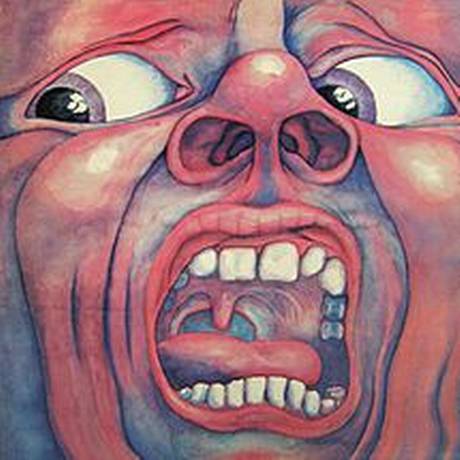
Outro elemento que virou modelo para o rock progressivo foi a capa do álbum: um pesadelo de cores vivas pintado por um amigo de Sinfield, Barry Godber. Aquela capa parecia ter transcendido a simples embalagem para se tornar arte, da mesma forma que a música ia além das formas simplistas do pop da época. Os lançamentos seguintes aprenderam essa lição — as paisagens alienígenas de Roger Dean alavancaram a popularidade do Yes quanto as letras místicas.

“In the Court of the Crimson King” abriu muitas portas. Yes, ELP, Pink Floyd e outros venderam dezenas de milhões de álbuns de rock progressivo — só “Dark Side of the Moon”, do Pink Floyd, já vendeu quase 50 milhões de cópias desde seu lançamento, em 1973.

Robert Fripp

Mas então veio o punk rock com seu minimalismo “faça você mesmo” e ética de lo-fi que quase instantaneamente fizeram qualquer esforço progressivo parecer ridículo. Robert Fripp não ficou surpreso — muitas bandas progressivas saíram “tragicamente do caminho”, disse ele, acrescentando: “O King Crimson teve a inteligência de deixar de existir em 1974; o que torna aqueles que associam a banda aos ‘excessos bombásticos do rock progressivo’ no mínimo idiotas”.

No entanto, o rock progressivo se recusa a morrer. Annie Clark (St Vincent) descreve como aprendeu na adolescência a tocar Jethro Tull, uma das bandas que mudou seu som por causa de “In the Court of the Crimson King” — numa sala de prática com um pôster do King Crimson. Ao mesmo tempo, bandas como Marillion, Radiohead, Mars Volta e Muse usam, abusam ou reinventam o rock progressivo (mesmo que, como o Radiohead, eles se recusem veementemente a admiti-lo). E Fripp reformou o King Crimson várias vezes, com várias formações – este mês, a última encarnação encerra uma turnê mundial, com direito a passagem pelo Rock in Rio .

Michael Giles, Robert Fripp, Ian McDonald

Enquanto isso, como diz McDonald, “50 anos depois, o álbum ainda se mantém”. Ele está certo. E isso é muito mais do que se pode dizer sobre “Tales of Topographic Oceans”.


Fonte: Jornal O Globo

07/10/2019

King Crimson faz grande show no encerramento do Palco Sunset no Rio


King Crimson encerra show no Rock in Rio com "21st Century Schizoid"

A banda britânica King Crimson, ícone do rock progressivo, fez na noite deste domingo sua estreia no Rock in Rio. Um show experimental que, sem dúvida, agradou aos fãs e também amantes de música 

A atual turnê comemora os 50 anos de carreira do grupo. Antes de tocar na Cidade do Rock, os músicos britânicos passaram por São Paulo e se apresentaram no Espaço das Américas, na sexta-feira (4). 

O público era pequeno, mas a banda foi compensada por uma plateia atenta e interessada, com pouquíssimos celulares em punho - em SP, eles haviam banido os aparelhos. O que é um show da banda: três baterias, o líder e guitarrista Robert Fripp escondido atrás de uma delas, assim como o baixista Tony Levin e o vocalista Jakko Jakszyk, e um público mais velho, com muita gente entre 40 e 50 anos. King Crimson se apresentou com toda a sua técnica. 


E com suas três baterias à frente dos demais integrantes, foram necessários seis minutos para que algum outro instrumento desse o ar da graça.

A partir disso, ficou claro que não haveria meio termo. Com um show de cerca de uma hora de duração, bem longe das três horas a que está acostumado, o grupo encurtou a setlist, mas não suas músicas.


Foram sete no total, com algumas menções a outras canções no meio, todas tocadas sem pressa e com seus quase dez minutos cada.

"The court of the crimson king" foi a primeira a fazer o público, pequeno mas claramente apaixonado e em sua maioria de cabelos brancos, cantar junto.


"Epitath" e "21th century schizoid man", responsáveis pelo encerramento, arrancaram aplausos e assobios a cada demonstração de virtuosismo de seus membros.

Até algumas pessoas com cara de "que?" desde o começo se entregaram com o tempo e chegaram a cantar junto da guitarra (sim) de Fripp.

São apenas seis músicas em uma hora, média de uma a cada dez minutos. E, no fim, voltam os bateristas, solando por mais uns cinco minutos até o fim do show. 

Robert Fripp, quem diria, se levanta, dispensa os fones de ouvido, pega uma câmera e começa a tirar fotos da plateia. Ele vai levar uma boa recordação do Rock in Rio. E o público também.

Uma grande apresentação no lugar errado. Mas quem esteve presente fez, ou pelo tentou, barulho suficiente para um palco lotado.

Fontes: G1, UOL


Entrevista de Tony Levin em 02 de outubro de 2019:

King Crimson - Entrevista com 89 A Radio Rock 02-10-2019

A 89 - A Rádio Rock entrevistou Tony Levin, baixista da banda King Crimson. Eles tocaram pela primeira vez em São Paulo, dia 04/10, no Espaço das Américas.


21st Century Schizoid

06/10/2019

King Crimson leva fãs ao êxtase em estreia no país


Se o som do King Crimson é inclassificável, o show da banda é muito mais, é uma experiência radical de música, para extasiar fãs.

Como era de se esperar, o show teve foco maior no álbum "In the Court of the Crimson King" (1969), o grande clássico do King Crimson, além de outras pérolas, como "Island", "Cirkus", "Indiscipline", "Red".

A banda criada há 50 anos pelo guitarrista britânico Robert Fripp fez seu primeiro show no Brasil na noite de sexta (4), no paulistano Espaço das Américas, antes de se apresentar no palco Sunset do Rock in Rio, no domingo (6). 

No festival carioca, limitações de tempo pela escala de shows do evento vão obrigar o grupo a reduzir drasticamente seu set para pouco mais de uma hora no palco.Em São Paulo, o King Crimson conseguiu mostrar seu show habitual, tocando por quase três horas. 

Na verdade, um pouco menos na contagem final de tempo, porque depois de uma primeira parte de quase 70 minutos, o público teve um intervalo de 20 minutos para circular fora das cadeiras no grande salão. Aí a banda voltou para tocar mais uma hora e meia. 

Intervalo parece mais coisa de concerto de orquestra do que de show de rock. E, no palco, a atitude da banda estava mesmo mais próxima do clima das salas eruditas. 


Os músicos não caminham pelo palco. As três baterias, mais uma das peculiaridades do King Crimson, ficam na frente, junto ao público. Atrás, sobre uma plataforma elevada, os outros quatro integrantes. O líder Fripp passa o show inteiro sentado, tocando guitarra e às vezes algum teclado.

Normalmente usados para imagens fechadas que ajudam a plateia a ver os músicos com mais detalhes, os telões perdem a função com o King Crimson. A única imagem exibida neles é uma visão geral do palco, de frente, mostrando toda a banda. Exatamente a mesma visão de quem está vendo do meio da plateia. E é só. 

Não são feitas projeções no fundo do palco, apenas uma discreta forma abstrata em azul, imóvel durante todo o show. Definitivamente, o King Crimson não dá a mínima para o visual. Só quer saber de música. 

E aí a banda faz toda a diferença. Os caras tocam uma barbaridade, principalmente Fripp e o baixista Tony Levin. O vocalista e também guitarrista Jakko Jakszyk se sai muito bem na dificílima missão de cantar quatro músicas que em 1969 foram imortalizadas pelo vozeirão de Greg Lake (1947-2016), que antes de integrar o gigante Emerson, Lake & Palmer foi cantor do King Crimson em seu álbum de estreia. 

É justamente esse disco, "In the Court of the Crimson King", que pontua momentos ímpares no show. É o álbum do grupo que mais chega perto de um, digamos, rock progressivo "tradicional". Depois, com as inúmeras mudanças de formação da banda feitas pelo onipresente Fripp, o grupo ficou bem mais experimental, com um leve flerte com o jazz.

Tem a ver com o perfil da banda, que apresenta peças longas, às vezes passando de dez minutos, com muito improviso e um tom de desafio instrumental que lembra os melhores combos do jazz moderno. 

Mas é muito emocionante quando o repertório do álbum de estreia é resgatado. São hinos do rock, de arrepiar: "Epitaph", "Moonchild", "In the Court of the Crimson King" e "21st Century Schizoid Man", esta fechando o bis. 


Todo o show é impactante, desde a abertura com "Hell Hounds of Krim", que incluiu trechos de "Garota de Ipanema". "Red", "Cirkus", "Indiscipline" e tantas outras eram recebidas com urros da plateia já nos primeiros acordes. 

E a plateia é um caso à parte. Longos cabelos brancos eram facilmente avistados em qualquer canto do Espaço das Américas, além de muitas cabeças calvas. O público era quase todo cinquentão e sessentão. Nas camisetas, estampas de bandas tão veteranas quanto o King Crimson —Jethro Tull, Yes, Aphrodite's Child, Pink Floyd, Tangerine Dream e outras das antigas. 
Depois de três horas simulando com as mãos guitarras e baterias tocadas no ar, esses fãs saíram muito satisfeitos. A questão é ver se o grupo vai agradar tanto a plateia heterogênea do Rock in Rio. Em São Paulo, tocando para seu público original, o King Crimson foi mesmo rei.

Veja, a seguir, o set-list em São Paulo:

Act I

1. Hell Hounds of Krim (com trecho de "Garota de Ipanema")
2. Larks' Tongues in Aspic (Part I)
3. Suitable Grounds for the Blues
4. Red
5. Epitaph
6. Drumsons
7. Neurotica
8. Moonchild
9. Radical Action II
10. Level Five

Act II

11. Drumzilla
12. Cirkus
13. EleKtriK
14. Easy Money
15. Larks' Tongues in Aspic (Part IV)
16. Islands
17. Indiscipline
18. The Court of the Crimson King
19. Starless

Bis:

20. 21st Century Schizoid Man


Fonte: Folha de São Paulo
por Thales de Menezes. 

04/10/2019

King Crimson hoje em São Paulo no Espaço das Américas


Folha de São Paulo
Thales de Menezes


Pela primeira vez no país, King Crimson traz seu rock inclassificável ao Brasil. O grupo se manteve fiel ao gênero progressivo e não abriu concessões em 50 anos de carreira

Show de três horas de duração, oito músicos no palco, sendo que três deles estão tocando baterias. No repertório, sempre surpresas, pinçadas em 13 álbuns de estúdio lançados em 50 anos de carreira. Rock inclassificável, que nasceu no progressivo e ali permaneceu, mas com novas maneiras de fazer música nesse gênero intrincado. 

Isso é o King Crimson, a banda do guitarrista inglês Robert Fripp formada em janeiro de 1969. E, incrível, esse grupo de rock virtuoso chega ao Brasil pela primeira vez só agora, tocando nesta sexta (4) em São Paulo e, no domingo (6), no Rock in Rio. 

“Não sei por que demorou tanto para um show do King Crimson no Brasil”, diz o baixista Tony Levin, 73, que desde 1981 faz parte da banda. “Você deve perguntar ao Robert.” 

Bem que a imprensa quer perguntar coisas a Fripp, 73, mas o guitarrista não dá entrevistas. E o King Crimson é mesmo dele, único integrante em todas as formações já criadas. “Sim, falam muito sobre Robert ser o dono da banda, mandar em tudo. É isso mesmo”, confirma Levin, rindo.

Mas ele destaca que tocar sob ordens de Fripp é incrível. Diz que o chefe é uma usina de ideias e tem na cabeça todos os rumos do King Crimson. 

“Ao contrário de outros grupos que começaram no progressivo e tiveram suas guinadas para outros estilos, o King Crimson segue fazendo o que sempre fez. E o mais legal é que faz muitas coisas diferentes”, brinca Levin. 

Ele tem razão. Talvez Fripp seja o artista de rock que menos concessões fez ao showbizz. Yes e Genesis —para citar dois exemplos de gigantes de raízes progressivas— tiveram suas aventuras no pop, num rock mais acessível a quem liga o rádio. Fripp nem chegou perto disso. 

“Você pode não saber o que vai encontrar num show do King Crimson, mas com certeza sabe o que não vai encontrar, ou seja, música fácil, tranquila. Robert é muito inquieto, genial”, afirma Levin, que tem muitas experiências ao lado de gênios nos palcos e nos estúdios. 

Ele tocou em mais de 500 álbuns, contratado por nomes estelares, como Peter Gabriel, John Lennon, David Bowie, Tom Waits, Lou Reed, Dire Straits, Pink Floyd, Alice Cooper, Bryan Ferry e Paul Simon. 

Levin já esteve no Brasil com Peter Gabriel e diz gostar da receptividade do público a vários tipos de som. “É preciso ter a mente aberta para novidades quando você vai a um show do King Crimson. A começar pelas três baterias no palco, o que abre espaço para muita experimentação.”

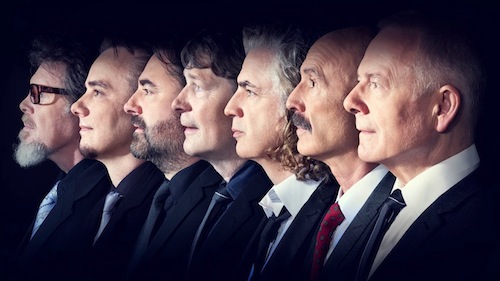
Jeremy Stacey, Gavin Harrison e Pat Mastelotto são os bateristas. Bill Rieflin também toca bateria, mas atualmente assume os teclados. O vocalista Jakko Jakszyk toca guitarra, flauta e teclados. Mel Collins é o saxofonista. Fripp e Levin, embora passem mais tempo na guitarra e no baixo, respectivamente, também se revezam nos teclados e computadores. 


Se o repertório do King Crimson permite muitas mudanças de um show para outro, há duas fases da banda que sempre marcam boa presença na lista das músicas que serão tocadas. 
“Discipline”, “Beat” e “Three of a Perfect Pair”, trilogia de álbuns lançados entre 1981 e 1984, fornecem várias boas faixas para as apresentações, entre elas o quase hit “Elephant Talk”. 

“Quem define o que entra é Robert, mas acredito que ele misture coisas que os fãs querem ouvir com outras que são bem desafiadoras para tocar ao vivo”, diz Levin. 

Mas a obra mais venerada é ainda o álbum de estreia, “In the Court of the Crimson King”, de 1969. Na formação desse disco, os vocais e o baixo estavam com Greg Lake, que sairia da banda poucos meses depois para formar o Emerson, Lake & Palmer. 

Às vezes, o King Crimson toca na mesma noite quatro ou cinco músicas desse álbum, entre elas “Epitaph”, hino do rock e maior clássico da banda. 

“Claro que temos de lidar com esse álbum, é uma obra-prima. O público ama esse disco, e nós também. O King Crimson pode desafiar as convenções de uma carreira típica de banda de rock, mas não vai deixar os fãs tristes”, afirma Levin. 


KING CRIMSON 

Onde Espaço das Américas, r. Tagipuru, 795, São Paulo. Sexta (4), às 22h 
Preço Ingressos pesquisar (ingresso rápido)
Onde Rock in Rio, palco Sunset. Domingo (6)

20/09/2019

King Crimson 2019-09-10 Auditorium Theatre, Chicago, IL (50th Anniversary) FLAC


KING CRIMSON 2019 TOUR - CELEBRATING 50 YEARS


King Crimson comemora os 50 anos mantendo as características e particularidades que sempre fizeram da banda um dos primeiros nomes a serem mencionados quando se fala em rock progressivo.

Tudo na banda evoca esse estilo, a começar pela formação incomum: o grupo conta com três bateristas, todos tocando ao mesmo tempo.

"Mas fazendo coisas diferentes", diz Levin. "Nossa abordagem musical sempre foi diferente e bem mais complexa. O nível dos músicos é elevado e, de várias maneiras, isso nos inspira. No fim, esse direcionamento da banda parte da cabeça de Robert [Fripp, guitarrista e líder do grupo]". 

"Mas é o melhor líder de banda que já conheci: ele nos diz onde temos que chegar, mas não nos fala como fazer, nem nos impõe nenhum caminho específico a ser seguido. Isso nos dá muita liberdade".

"É possível que apresentemos algo novo,é verdade. Mas, se tivesse que apostar, diria que boa parte do show será formada por clássicos da década de 1970. Nossas apresentações são longas, com cerca de três horas, dá para encaixar muita coisa. Estamos na nossa melhor forma como músicos e o público vai perceber isso", explica Levin.

"As apresentações e gravações da banda dependem da vontade de Robert – e isso pode demorar algum tempo para acontecer. Além disso, todos nós temos projetos paralelos que consomem muito do nosso tempo",

"É verdade. O King Crimson nunca mudou seu estilo, nunca fez concessões. Costumo dizer que somos a banda de rock progressivo por excelência. Por isso acredito que nossos fãs também são bastante particulares. São pessoas que, de fato, se importam com a música que fazemos". Conclui Levin.

A banda de rock progressivo comemora 50 anos de carreira no Brasil com apresentações no Espaço das Américas, Barra Funda, São Paulo, no dia 4 de outubro, e no Palco Sunset (Rock in Rio) dia 6 de outubro, data de encerramento do festival.

Pelos áudios aqui disponíveis é possível se ter uma boa ideia do peculiar altíssimo nível da banda, que nesta turnê especial não poderia ser diferente.

Abaixo uma resenha pela revista Illinois Entertainer sobre o show deste post, no Teatro Chicago, Illinois, ocorrido dia 10 de setembro último. Confira


Live Review: King Crimson at The Auditorium Theatre

Chicago Theatre
Tuesday, September 10, 2019


When progressive rock titans King Crimson last visited Chicago in 2017, the proceedings at Chicago Theatre went so well that the band released an officially sanctioned live album of the concert. On Tuesday night, the English septet stopped at the venerable Auditorium Theatre for its 2019 Celebration Tour. The group were clearly aiming for similar heights, delivering a three-hour performance that spanned 50 years of musical challenges and thrills since the release of 1969 debut album In the Court of the Crimson King.

Befitting its stature as the standard-bearer for prog-rock, the band left no song in its familiar form. Instrumental excursions during songs like 1970’s “Pictures of a City” and even recent fare like 2016’s “Suitable Grounds for the Blues” were deconstructed and rebuilt to suit the considerable strengths of the current Crim line-up. The band’s spartan stage dressing put emphasis squarely onto the music, without distraction. The only change in lighting was a dramatic shift to deep red light late in the concert, when the band shifted from the moody and moving verses of “Starless” into the song’s sinister-sounding instrumental passage.


Bandleader Robert Fripp was true to form as a reluctant and reticent but virtuosic guitar hero. His position was seated in the second line of players, the better to see the band’s front-line phalanx of thundering and dazzling percussionists. Although Fripp was no flamboyant showman, his performance during instrumentals like “Red” and the slashing, chopping “Larks’ Tongues in Aspic (Part IV)” was focused, meticulous, committed and intense.

The band’s front line was a percussion trio including longtime Crim drummer Pat Mastelotto, veteran member and former Porcupine Tree drummer Gavin Harrison, and 2016 recruit Jeremy Stacey. All three branched out from standard tools and techniques with stunning dexterity, splitting into controlled chaos and returning to fuse into rhythmic unison during percussive showpieces “Hell Hounds of Krim” and “Devil Dogs of Tessellation Row.” Stacey proved equally adept at piano for songs including “Islands” and “Easy Money.” Mastelloto integrated electronic instruments into his rhythms, and had a wall of dangling percussive toys surrounding a large gong behind his kit. Harrison hewed closer to his drum set, masterfully playing beats within beats. The drummers played a rhythmic game of hot potato during “Indiscipline” by tossing tricky shapes at one another in gleeful improvisation, and shared fills that traveled the line from Harrison to Stacey to Mastelotto and back again during “Radical Action II.”


Singer and guitarist Jakko Jakszyk was featured during the band’s most accessible fare, including the retooled “Frame by Frame” where he shared rich vocal harmony with Levin. Jakszyk’s swooning vocal melody during the verses traded space with Fripp’s frenetic guitar during instrumental passages. Jakszyk followed the gentle vocal melody of “Islands” by taking a deft guitar solo. Fripp shifted to mellotron for the song, while winds player Mel Collins took flight on tenor saxophone.

The melodic core of the band was anchored by bassist Tony Levin, who held the low frequencies (and then some) with instruments including electric bass and the 12-stringed Chapman Stick. Levin took a robust pizzicato-plucked solo during “Moonchild,” before bowing his sleek electric upright bass. Meanwhile, Fripp played gliding orchestral string lines with a tone like the one he deployed on David Bowie’s “Heroes.” Levin played slippery rhythms using the Stick during “EleKtriK” and “Indiscipline.” He joined Jakszyk for more vocal harmonies during “Cat Food.” Levin’s melodic bass grounded “Starless” and led into its pensive, clockwork instrumental section that paradoxically made time stand still.


Early bandmember Collins has provided grace and texture since returning to the lineup in 2013, adding saxophones and flute to songs like “Red” as if they’d always belonged there. Collins’ free-jazz baritone sax both heightened the chaos and counterbalance the jagged rhythm of “Neurotica.” His flute adorned Jakszyk’s baroque guitar and vocal during “In the Court of the Crimson King,” earning big cheers from fans of the band’s early albums. The most demonstrative of the players on stage, Collins responded to the ovation with a broad smile and by pumping his fist to his heart in salute. Collins’ baritone saxophone also underscored “Easy Money,” a song that demonstrated precisely how funky a prog band can get outside of 4/4 time.

The set list was a worthy primer for King Crimson’s catalog of 13 albums dating to 2003’s The Power to Believe. For songs like “Suitable Grounds for the Blues” the band exceeded its studio canon to play material heard only on live albums like Radical Action to Unseat the Hold of Monkey Mind. In observance of its 50th birthday as a cornerstone of prog-rock, In The Court of the Crimson King was visited four times. Selections included the dramatic “Epitaph” and Fripp’s slashing, two-ton fretwork during a ferocious encore of “21st Century Schizoid Man.”

After fifty years of history and musical intuition, King Crimson’s imaginative improvisational sense and unparalleled technical acumen leave the band prepared to traverse as much uncharted territory as Fripp still wishes to explore. When the drum trio eventually synched up during that final blast of “20th Century Schizoid Man” for a simultaneous and flawless stick toss mid-song, it was finally acceptable to think for a moment, “Okay. Now, they’re just showing off.”

– Jeff Elbel


King Crimson
2019-09-10
Auditorium Theatre
Chicago, IL


Set 1:

01. Announcments/crowd
02. Hell Hounds of Krim
03. Pictures of a City
04. Neurotica
05. Suitable Grounds for the Blues
06. Red
07. Moonchild
08. Epitaph
09. Fairy Dust of the Drum Sons
10. Cat Food
11. EleKtriK
12. The Court of the Crimson King

Set 2:

01. Devil Dogs of Tessellation Row
02. Frame by Frame
03. Larks' Tongues in Aspic (Part IV)
04. Islands
05. Easy Money
06. Radical Action II
07. Level Five
08. Starless
09. Indiscipline
Encore:
10. 21st Century Schizoid Man
------------------
Total = 162:39
------------------


FLAC
ulozto.net (923 MB)
Torrent: King Crimson 2019-09-10 (880.28 MB) Yeeshkul


Related Posts Plugin for WordPress, Blogger...

David Gilmour


Por gentileza informe links quebrados - Please report broken links

Nome

E-mail *

Mensagem *