.

.
Mostrando postagens com marcador Interview. Mostrar todas as postagens

20/05/2023

Guy Pratt, no Pink Floyd a partir de 1985, no podcast No Treble (Confira a integra da entrevista)


O músico Guy Pratt, lendário e habilidoso baixista, que cativou, e ainda continua cativando o público, agora em turnê com Nick Mason, além de inspirar tantos outros baixistas por décadas, concedeu entrevista ao podcast No Treble (acima)

Como membro central do Pink Floyd desde o final dos anos 80, Guy contribuiu significativamente para o som icônico da banda, mostrando suas habilidades excepcionais e versatilidade como baixista eclético.


Nascido em Londres em 1962, a paixão de Guy pela música o levou a dominar a arte de tocar baixo, tornando-se um dos músicos de sessão e de turnê mais requisitados da indústria musical

Seu talento notável e dedicação inabalável ao seu ofício contribuíram para sua impressionante, duradoura e impactante carreira no mundo do contrabaixo. 

Ao longo dos anos, Guy tocou e gravou com alguns dos maiores nomes da música, incluindo Pink Floyd (Delicate Sound of Thunder, Pulse, The Division Bell), David Gilmour, Madonna (“Like A Prayer”), Michael Jackson e com o Roxy Music (trabalho solo de Bryan Ferry também).  

Com uma extensa discografia, a influência de Guy Pratt pode ser ouvida em vários gêneros e épocas da música. Guy provou ser um compositor talentoso, co-escrevendo faixas para artistas como Robert Palmer, Bryan Ferry e David Gilmour. 

Ele também explorou o mundo da atuação e da comédia stand-up, demonstrando suas habilidades multifacetadas além do reino da música. 

Como um contador de histórias natural e músico apaixonado, Guy "co-apresenta" o popular podcast, ao lado do colega, também músico Gary Kemp (Spandau Ballet). Ele também é o autor de seu próprio livro de memórias, My Bass And Other Animals (publicado em 2009).


18/04/2020

Por que o Pink Floyd não quer uma reedição de ‘Animals’? (Rolling Stone)


O disco da banda foi lançado em 1977


Rolling Stone Brasil 
17/04/2020 

Em entrevista para a Rolling Stone EUA, Roger Waters relevou o motivo do Pink Floyd não querer uma reedição do disco Animals (1977).

Primeiro, o músico revelou que tentou marcar um encontro com os ex-colegas,  David Gilmour e Nick Mason. No entanto, o plano não se concretizou: "Escrevi uma espécie de plano... Mas meu plano não deu frutos".

O artista ainda revelou que uma reunião da banda não daria muito certo: "Não, [uma reunião] não seria legal. Seria horrível. Obviamente, se você é fã daqueles dias do Pink Floyd, então você tem um ponto de vista diferente. Tive que viver com isso. Essa foi a minha vida. E sei que depois disso, fui escalado como um vilão por quem quer que seja. Que assim seja. Posso viver com isso. Mas trocaria minha liberdade por essas correntes? De nenhuma maneira".

Enquanto David Gilmour não nega reunião com Pink Floyd,  também não menciona Roger Waters, como visto na reportagem desta revista em 18/06/2019, quando causou impacto com seu comentário ‘Nunca diga nunca’, ao ser questionado sobre um possível reencontro com os companheiros de banda durante o último episódio de The David Gilmour Podcast,

Sobre Animals, Waters revelou que foi exatamente sobre o álbum que a banda conversou. “[A conversa] foi que podemos lançar o vinil remasterizado de "Animals" sem que ele se transforme na terceira guerra mundial?".

O artista completou: "Na verdade, sugeri que fosse democrático. Disse: 'Por que simplesmente não temos uma votação? Somos apenas três. E então podemos decidir tudo isso'. E pelo menos podemos simplesmente seguir em frente. Mas eles não aceitaram isso. Eles não queriam".

Animals foi um sucesso de crítica e ficou em 3º lugar na Billboard, além de garantir uma certificação quádrupla de disco de platina. Roger Waters saiu do Pink Floyd em 1985.


22/11/2019

David Gilmour diz que saída de Roger Waters do Pink Floyd foi de certa forma libertadora (The Later Years)


Pink Floyd - The Later Years (About A Momentary Lapse Of Reason)


Rolling Stones Brasil
Em entrevista, Gilmour explicou a sensação de seguir com a banda sem Waters


Em 1985, o Pink Floyd surpreendeu o público quando, de certa forma, optou em seguir as atividades sem o principal vocalista, baixista e compositor, Roger Waters. 

Sem ele, foram lançados dois álbuns - A Momentary Lapse Of Reason e The Division Bell - entre as décadas de 1980 e 1990. Logo depois, o grupo entrou em hiato e apenas em 2014 foi divulgado um último projeto com esboços de algumas canções. 

Mas agora, em um box set liberado recentemente, diversos materiais relacionados ao período inicial de Waters na banda foram compilados. Intitulado de The Later Years, o projeto relança o álbum A Momentary Lapse Of Reason e o ao vivo Delicate Sound Of Thunder, além de apresentar gravações inéditas de 1987 e 1994. 

Para promover a novidade, algumas entrevistas estão sendo divulgadas e em um desses registros (vídeo acima), David Gilmour explicou a sensação de seguir com o Pink Floyd sem Waters e que para todos foi algo "libertador". 

"Todos sabíamos que Roger iria sair. Ele não estava feliz, nós também não. Eu sempre soube que queria seguir em frente, Nick parecia desejar isso também. Falei com Rick durante uma folga, na Grécia, e conversamos sobre seguir em frente e ele também queria". 

Gilmour contou sobre as brigas em que se envolveram nos últimos anos de Waters no Pink Floyd. "Eu me sentia confiante de que as gravadoras gostariam de lançar um álbum nosso. Obviamente, não ter Roger foi algo diferente, mas em algumas formas, nos sentíamos livres." 

Ele acrescenta: "As tensões dos dois álbuns anteriores, especialmente em 'The Final Cut', já não estavam mais ali. Éramos apenas nós juntos, compondo e gravando. Havia um senso de liberdade e otimismo."


24/10/2019

Nick Mason conta como foi quando conheceu Roger Waters e Rick Wright (vídeo)


O convidado mais recente do programa de Brian Johnson (AC/DC) é Nick Mason, que contou uma história bem curiosa sobre o início da banda, quando relembrou como foi quando conheceu Roger Waters e Rick Wright.

De acordo com Mason no programa Life On The Road (vídeo acima), o grupo se uniu por conta de seu carro em 1964.  

O trio se conheceu no colégio em Londres em 1964. “Regent Street Plytechnic – foi onde os conheci”, disse Mason a Brian Johnson. “Todos nós estudávamos para sermos arquitetos. Foi no fim da arquitetura que a música decolou… ou não!”

Ele relembra: “Nós meio que nos conhecemos porque Roger sabia que eu tinha um carro — não sei se ele sabia qual era o carro, porque na verdade era um Austin 7 Chummy com uma velocidade máxima de 5 km/h e não tinha freios! Mas quando ele perguntou se eu poderia emprestá-lo, eu disse: ‘Não’, mas ele também tentou pegar um cigarro de Rick e, famosamente, Rick disse: ‘Não’, o que definiu o padrão nos próximos 50 anos.

Foi um momento importante porque, se não fosse por isso, talvez não estivéssemos sentados aqui agora.”, refletiu.

03/04/2019

Gilmour: 'Pessoas que tocam Fender são mais reconhecíveis'


O britânico David Gilmour é um guitarrista que dispensa qualquer tipo de apresentação. Ao longo de seus mais de 55 anos de carreira, o cara elaborou solos, riffs, bases e arranjos memoráveis.

Durante os tempos de Pink Floyd, bem como em sua carreira solo, Gilmour ficou conhecido por usar guitarras da Fender, sobretudo os modelos Stratocaster e Telecaster. Em uma recente entrevista à Guitarist Magazine, o músico falou sobre a sua devoção pelas guitarras criadas pelo saudoso Leo Fender, especialmente a Strato.

"A Stratocaster tende a acentuar a personalidade da pessoa que a toca. As pessoas que tocam Fender são mais reconhecíveis do que as pessoas que tocam outras guitarras de marcas conhecidas"

Num outro trecho da entrevista compartilhado pela publicação, no entanto, Gilmour revelou seu amor por uma Les Paul que usou para gravar um dos hinos “floydianos”. Segundo ele, durante a gravação, a guitar foi plugada diretamente na mesa de som, ou seja, não rolou uso de amplificadores, algo que é bastante incomum.

“Havia um vendedor de guitarras em Nova Jersey que tinha uma 1955 Les Paul. Era toda dourada. Comprei e mandei para Los Angeles, onde trabalhávamos no álbum ‘The Wall’. Não muito tempo depois, eu a usei para o solo de ‘Another Brick In The Wall (Part 2)’. Nós a colocamos diretamente na mesa para gravar, não em um amplificador. Sempre amei aquela guitarra”, disse.

28/03/2019

David Gilmour concede entrevista à casa de leilões Christie


The David Gilmour Guitar Collection Promo Video


Em entrevista, David Gilmour afirma que quem toca Fender é mais facilmente reconhecível do que as pessoas que tocam com outras guitarras famosas.

Com o leilão de 120 das suas guitarras, incluindo a  famosa Black Strat – David Gilmour concedeu uma entrevista à casa de leilões Christie, que irá promover a venda das guitarras. Na entrevista, David Gilmour fala da sua relação com guitarras e, naturalmente, a Stratocaster ocupa uma grande parte da conversa.

David Gilmour afirma categoricamente que o design criado por Leo Fender é o mais expressivo de todos no universo da guitarra eléctrica.

"A Stratocaster tende a potencializar a personalidade de quem está tocando. As pessoas que tocam Fender são mais reconhecíveis que as pessoas que tocam outras guitarras bastante famosas". Pode deduzir-se que talvez o músico mande  uma indireta aos fãs das Les Paul.

Em destaque na conversa surge a revelação de que o famosíssimo solo de “Another Brick In The Wall (Part 2)” foi gravado sem a guitarra estar ligada a qualquer amplificador e, conciliado com uma estupenda Gibson.

"Havia um lojista em New Jersey que tinha uma Les Paul de 1955 no seu catálogo. Era completamente dourada (inclusive o braço) e era linda. Comprei-a e foi enviada para Los Angeles, onde estávamos trabalhando no “The Wall”. Pouco após a sua chegada usei-a no solo de “Another Brick In The Wall (Part 2)”. Ligamo-la  à mesa, direto para a fita, sem lhe conectar a nenhum amplificador. Sempre adorei essa guitarra".


O dinheiro arrecadado pelo leilão será doado à instituições de caridade. “Leiloando essas guitarras, espero fornecer ajuda a lugares que realmente necessitam, e fazer bem ao mundo. Vai ser difícil vê-las indo embora, e talvez eu até decida, algum dia, procurar um ou outra para comprar de volta!”.

Em entrevista à Rolling Stone EUA, Gilmour afirmou que as pessoas não devem ver essa decisão como um indício de aposentadoria. Ele disse que “me aposentar não é algo que eu consiga fazer rápida e facilmente. Nem preciso realmente me aposentar. Não preciso dizer essas palavras”, e adicionou que “se eu me aposentar, será um processo silencioso e imperceptível. Mas não agora.”


A Guided Tour Of The David Gilmour Guitar Collection


Entrevista:
David Gilmour: My life in guitars

As the exhibition of The David Gilmour Guitar Collection opens in London, the Pink Floyd singer and songwriter plucks some pearls of wisdom from his long history with guitars

My next door neighbour was given a guitar when I was around 11 or 12. He probably hung onto it for around a year but I don’t think he ever touched it. We were friends and I asked him whether I could borrow it. I don’t think I ever gave it back.

There’s nothing more depressing than trying to learn the guitar on one that’s out of tune. My parents bought me the Pete Seeger Guitar Tutor record, which was a 12-inch vinyl record that came with a book that explained the lessons and showed you chord charts. The first lesson was how to tune a guitar using a pitch pipe.

The Stratocaster was my boyhood dream guitar. I loved Hank Marvin playing the Fender Stratocaster but I always wanted to sing and play.

As a teenager in Cambridge I used to spend a lot of time in a music shop called Ken Stevens. It was very narrow with guitars all the way down both sides. There was a Stratocaster hanging in there for years, which we sometimes persuaded the owner to let us touch or play the occasional tune on. I could never afford it though.

When I was young I copied every other guitar player.Copying is where you start and a big part of the way forward. After a while you find that all that stuff merges into something that becomes your own sound and style.

The first guitar my parents bought me was a Tatay. It was a classical type Spanish guitar. I think I’ve still got it somewhere.

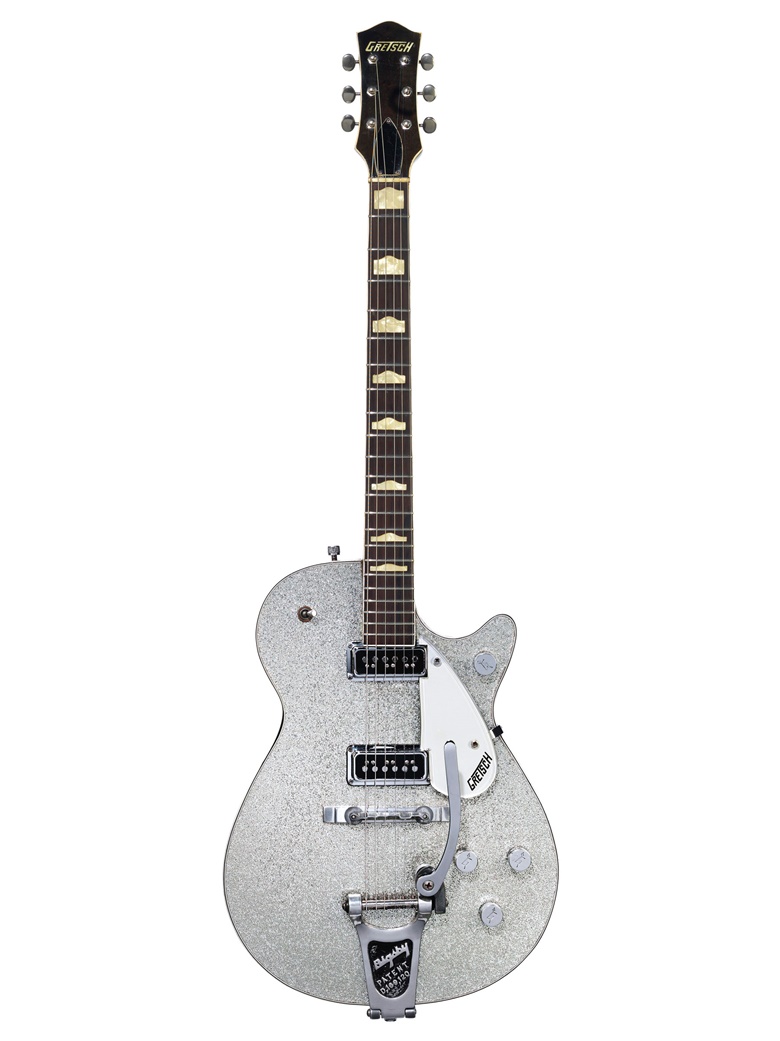
I always had a fondness for Gretsch guitars. Maybe it’s because Duane Eddy played a Gretsch in his early years. You can hear a guitar on a track on the radio and you can usually tell when it’s a Gretsch.


My first electric guitar experience was with a Selmer Rex archtop guitar with F holes. They were popular with jazz guitarists and were designed with space for a pick-up to be added. I bought a pick-up, put it on and things moved on from there.

I didn’t want to specialise in one area, I wanted to learn a bit of everything. I wanted to be able to play Elvis Presley and The Everly Brothers songs but I also loved acoustic music, as well as Rock and Roll I loved folk music and I loved acoustic blues music. I was listening to Pete Seeger, to Woody Guthrie and Lead Belly, who was one of my favourites and a great player of the 12-string guitar.


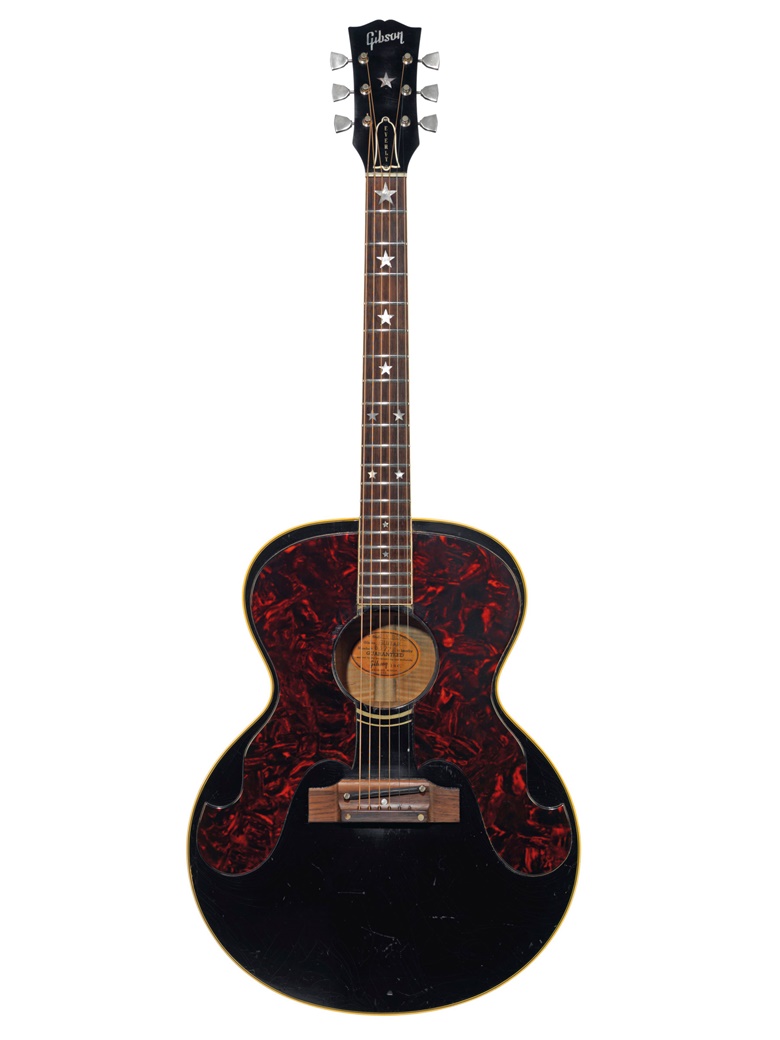
Gibson Incorporated, Kalamazoo, 1963. An acoustic guitar, Everly Brothers, J-180. Estimate: $10,000-15,000. Offered in The David Gilmour Guitar Collection on 20 June at Christie’s in New York

British radio was very haphazard when I was growing up. The strangest pieces of music in all sorts of different categories would follow on from each other. I rather liked that.

Someone counts, one, two, three, four and you’ve got to be there, you can’t stop. If you make a mistake, you can’t go back and fix it; you’ve just got to keep moving on. There’s nothing like being in a group of people who are playing something to improve your learning.

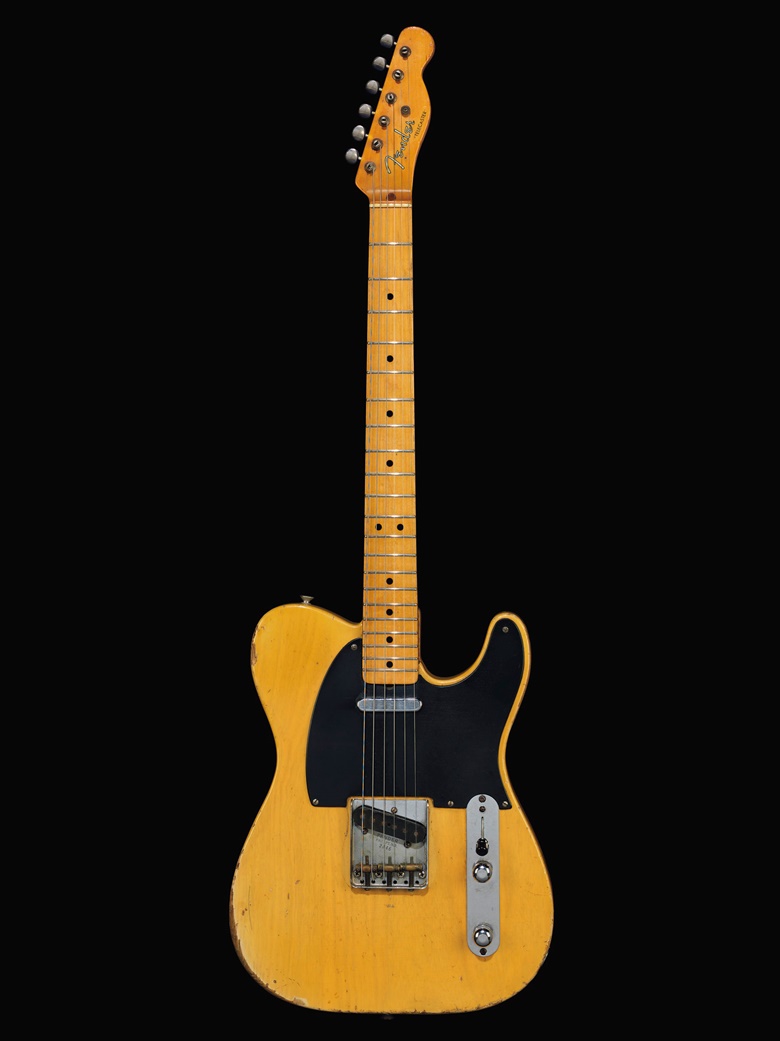
My first Fender was a Telecaster. My parents gave it to me for my 21st birthday. They lived in New York and had a friend of theirs, who was coming to Paris where I was living at the time, deliver it to me. It was an enormous thrill.


I don’t look back at my career and think this was a great solo and this one wasn’t. I just do them, and hope for the best.

Manny’s was a very New York experience. I bought the Black Strat from Manny’s in 1970. The shop was already legendary. It’s hard to describe but it was a wonderful place.

I helped mix the sound for Jimi Hendrix at the Isle of Wight Festival in 1970. Not a lot of people know that.

I bought the Martin D-35 acoustic from a man on 48thStreet in New York. I was going to Manny’s to buy an acoustic and this guy came up to me and said, ‘What do you want? What are you getting? Then he pulled out this guitar. I had a strum and said, ‘Okay, that will do.’ It was very nice then and still is gorgeous.
‘I didn’t hunt for the notes on Shine On You Crazy Diamond, they found themselves’ — David Gilmour

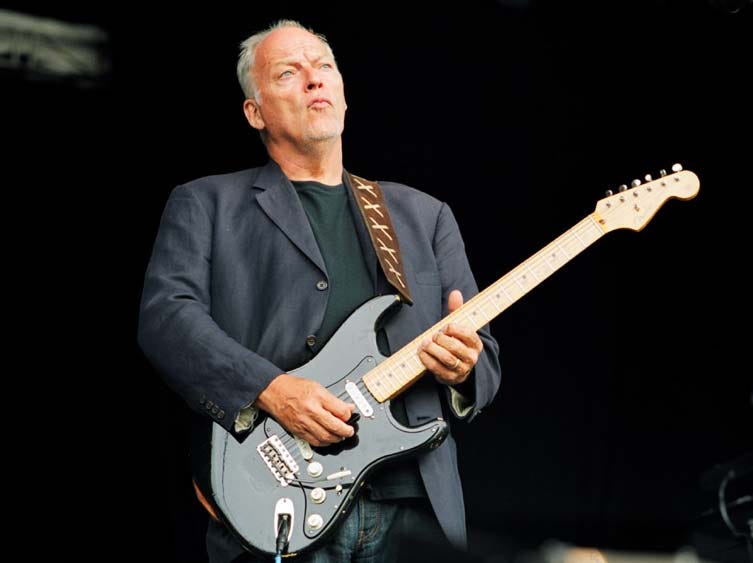
The Stratocaster tends to enhance the personality of the person playing it. People playing Fenders are more recognisably themselves than people playing some of the other well known guitars.

The Black Strat was just a guitar. It was my guitar; it was the one I used. What can you say? It has earned its keep.

I’d always kind of wanted a Gibson Les Paul. We used to be sent various circulars of guitars that were on sale throughout the world. There was one guitar trader in New Jersey who had the 1955 Les Paul on his list. It was all gold — the back and the sides and the back of the neck, and it looked great. I bought it and had it sent to LA where we were working on The Wall album. Not long after it arrived I used it for the solo on Another Brick in the Wall, (Part 2). We injected it straight through the desk and onto tape, not through any amplifier at all. I’ve always loved that guitar.


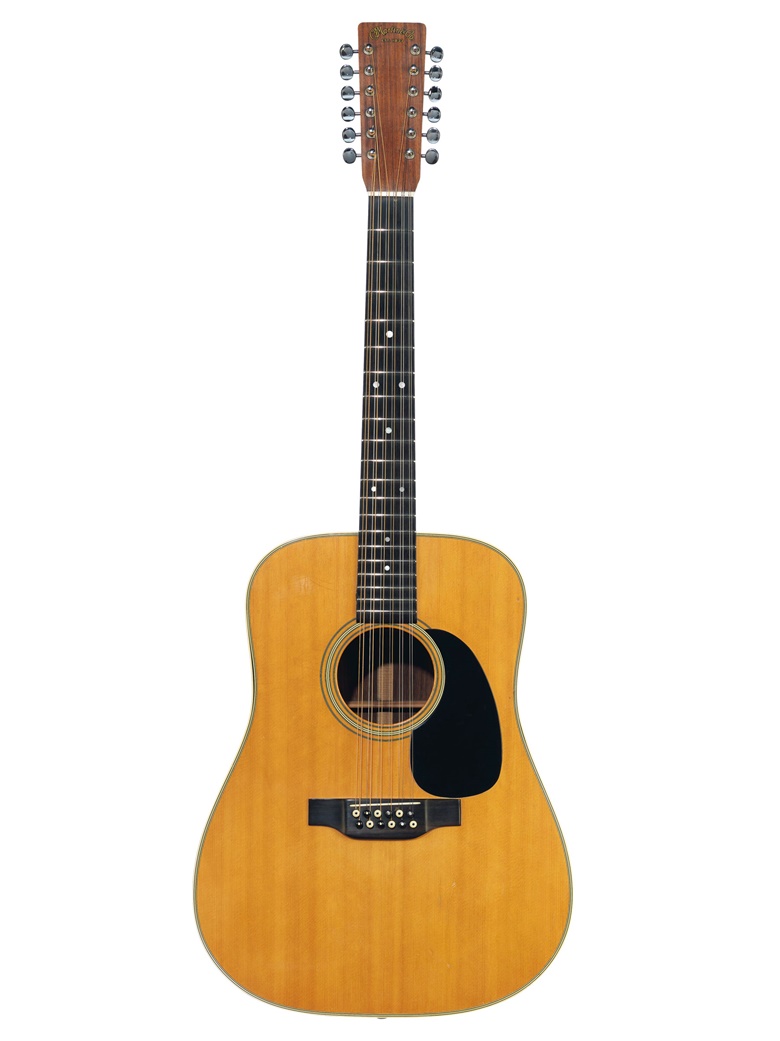
C.F. Martin & Company, Nazareth, 1971. An acoustic guitar, D12-28. Estimate: $5,000-10,000. Offered in The David Gilmour Guitar Collection on 20 June at Christie’s in New York

Back then, for someone like me, travelling in the States was like going into a candy store. You could go into an old junk shop and among all the AK47s and other terrifying things for sale there would be guitars, old guitars. Several of the guitars that I own were bought in second hand stores around the United States, and in Seattle particularly. In London they were harder to track down.

Pieces of music often present themselves when you’re strumming. A couple of notes can make a little connection in your mind so you play them again and then they expand a little bit. Ninety per cent of the little tunes I play, later on don’t seem to have any particular meaning or magic. And then you play something else and it has a magic to it and you hope that magic will work for other people too. There’s no real way of explaining that or understanding quite how that works.

I didn’t hunt for the notes on Shine On You Crazy Diamond, they found themselves. I was sitting playing my Black Strat with the chaps in a rehearsal room in King’s Cross and somehow they fell out of the guitar.


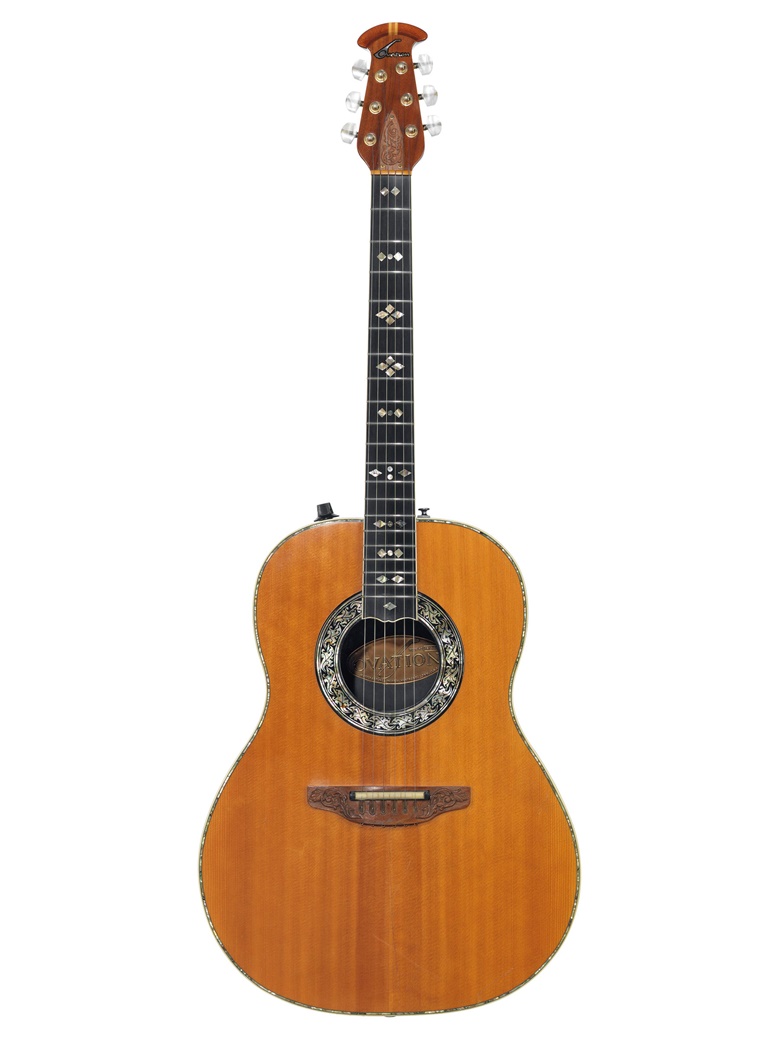
There are fortunate moments when someone has told you something and you’ve got it wrong. I had some friends who were working at Abbey Road on an album. Bruce Welch, the rhythm guitar player in The Shadows, was producing them. They had put down a couple of acoustic tracks and he said he wanted to put a high strung guitar on as well to thicken the sound of the acoustics. I didn’t know what that was but it sounded interesting and I decided to work on my own version, so I put some thin gauge strings onto one of my Ovations. I found out later it wasn’t remotely what the normal high strung tuning was, but it worked for me. I wrote what became Comfortably Numb on that guitar with that tuning. It has remained in that tuning ever since. 

I like the older guitars. It feels like they have been played a lot over years, and the vibrations of the different pieces of wood that make up the instrument have melded into one overall sound that’s beautiful. 


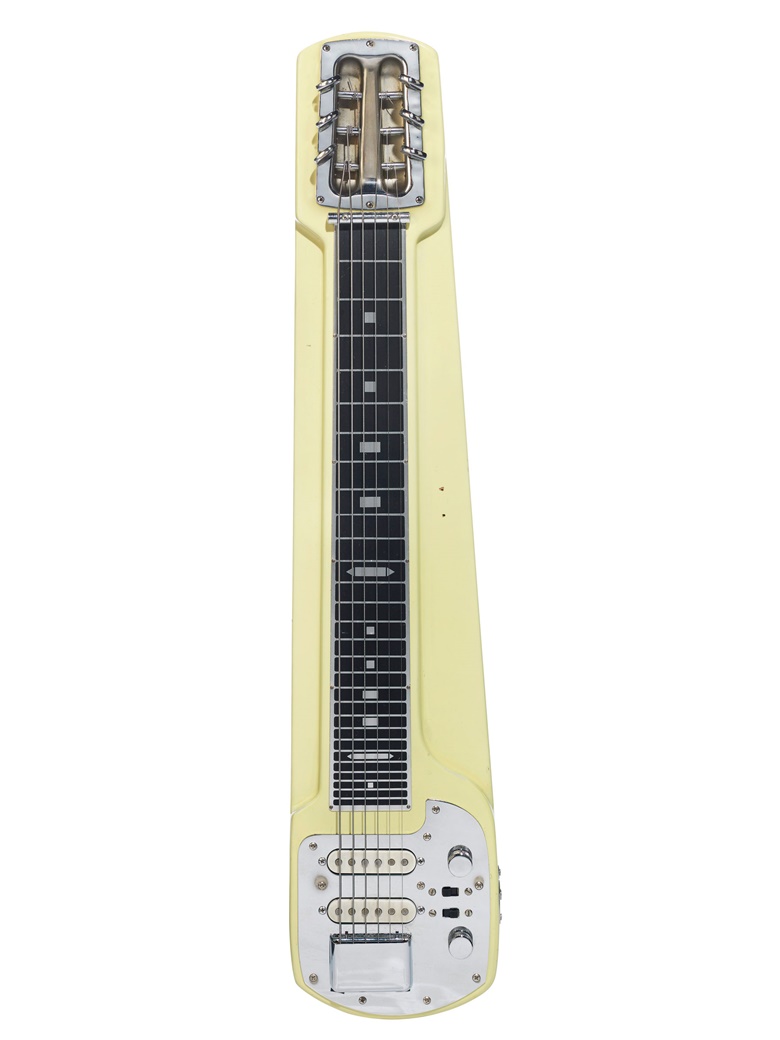
Jedson, Japan, 1974. An electric console steel guitar. Estimate: $1,000-2,000. Offered in The David Gilmour Guitar Collection on 20 June at Christie’s in New York

I once used a Jedson guitar to break my way out of a room I was trapped in. I lived in a house in the country that had a little guitar room with old fashioned studio doors that clamped shut. Late one night the door handle broke and I couldn’t get out. I was trapped inside with nothing but a load of guitars. This was long before mobile phones, so I took the leg off a slide guitar and used it to break out.

Guitars are always there and I doodle on them every day.Often I’ll take out my iPhone and record the doodles. I have hundreds. They give me ideas for songs. One of these days I will have a listen through them and decide on some to take further.

These are instruments that have served me very well.They’ve given me music and I’ve loved them, but now it’s time for them to go off and be part of someone else’s musical life. I’m hoping they’ll inspire music in other people.

All these guitars have their individuality, their own tone and some element of magic about them. I hope that I can do some good by selling them and using the money to help to make this world a slightly better place.

30/01/2019

'Tudo tem de ir', diz David Gilmour, sobre leilão de 120 guitarras (Rolling Stone)


Gilmour vai vender icônicas Fender Stratocaster e outros instrumentos para levantar fundos para caridade.


Matéria
Rolling Stone
By Kory Grow


David Gilmour, o guitarrista, cantor e compositor à frente do Pink Floyd, vai leiloar cerca de 120 das icônicas guitarras com que gravou discos da banda e solo e com que fez shows pelo mundo nos últimos mais de 50 anos.

“Tudo tem de ir”, disse Gilmour, bem-humorado, à revista americana Rolling Stone. “É a promoção de primavera”, ele brincou, referindo-se à estação que, no hemisfério Norte, começa em março. 

A lista de instrumentos que serão leiloados em bloco na sede da casa de leilões Christie, em Nova York, em junho, inclui muitos dos instrumentos mais conhecidos do músico.

Ele vai vender a guitarra modelo Fender Stratocaster de cor preta, por exemplo, com que gravou sucessos da banda inglesa, como “Money”, “Shine On You Crazy Diamond” e “Comfortably Numb”. 

A lista inclui ainda o violão de 12 cordas da marca Martin com que Gilmour registrou “Wish You Were Here” e um violão da marca Ovation que ele usou em quase todas as apresentações ao vivo que fez desde os anos 1980. 

“Essas guitarras foram muito boas para mim”, disse Gilmour à Rolling Stone ao telefone, falando de sua casa na Inglaterra. “Elas são minhas amigas. Me deram muitas músicas. Apenas acho que passou da hora de elas servirem a outra pessoa. Tive meu tempo com elas. E o dinheiro que elas vão gerar vai fazer muitas coisas boas ao mundo.”


Os recursos oriundos do leilão vão beneficiar a instituição de caridade fundada por Gilmour há décadas. “O dinheiro vai servir a demandas de pessoas famintas, sem-teto ou vítimas de migrações forçadas em todo o mundo”, disse Gilmour, segundo quem não serão fomentadas só programas no Reino Unido.

Mas, para além da caridade, Gilmour vê na venda das guitarras uma forma de abrir espaço em casa. Segundo o músico, essa é uma ideia que adiou por falta de tempo desde 1987, quando o Pink Floyd lançou o disco “A Momentary Lapse of Reason”, o primeiro álbum da banda desde a saída de Roger Waters. 

“Estou ao mesmo tempo triste por perder alguns de meus instrumentos e aliviado por tocar adiante esse projeto. Se eu precisar de uma guitarra específica, vou à loja e compro outra. Guitarras são minha ferramenta de trabalho; elas me deram músicas, mas, no fim das contas, são apenas isso, ferramentas.” 

Segundo o músico, mesmo vendendo 120 guitarras, ainda vão sobrar cerca de 20 instrumentos em sua coleção. 

Já a primeira guitarra de sua coleção, uma Fender modelo Telecaster que Gilmour ganhou dos pais quando fez 21 anos, não estará no leilão; o músico a despachou em um voo da TWA de Londres para os Estados Unidos, em 1968, e a antiga companhia aérea perdeu o instrumento. 

“Tive muita sorte na vida. Fui bem-sucedido artisticamente e financeiramente. Eu já sentia muitos, muitos anos atrás que deveria fazer algo para melhorar um pouco o mundo. Esse vai ser um grande impulso para a capacidade [da fundação]”, diz Gilmour. 

O músico afirmou ainda que não se preocupou em calcular o total de dinheiro que o leilão vai levantar nem leva em consideração eventuais especulações de que, ao vender suas guitarras, ele estaria sinalizando uma aposentadoria. 

“Eu não tenho que me aposentar. Não preciso dizer essas palavras. Se eu parar, vai ser um processo quieto e desapercebido. Mas não agora.”


Resultado de imagem para david gilmour Fender Stratocaster


08/12/2018

Nick Mason convida Roger Waters para tocar em sua nova banda


MIV
The Music Journal Brazil 
Por Marcelo de Assis | dezembro 6, 2018


O baterista Nick Mason revelou que fez um convite para que Roger Waters participasse em um de seus próximos shows com a sua nova banda Saucerful of Secrets. Mason confirmou que realizará uma tour na América do Norte de 12 de março a 22 de abril de 2019.

Em uma recente entrevista para a revista Rolling Stone, Nick Mason consultou Roger Waters e David Gilmour, seus antigos colegas do Pink Floyd, antes de iniciar este novo projeto: “Eu pensei que seria uma boa maneira. Não achei que fosse uma questão de obter permissão ou algo assim, mas o que foi ótimo é que eles me encorajaram”, disse.

Quanto ao convite que fez a Waters, o lendário baterista ainda está reticente: “Disse que ele poderia vir e convidar para uma música ou duas, mas eu não estou prendendo a respiração sobre isso. Podemos nos preocupar com estrelas convidadas quando estivermos um pouco mais avançados”, explicou.

Mason tocou em alguns pontos importantes para esta sua nova fase: a ideia de se apresentar na América do Sul (crescendo as chances de uma apresentação no Brasil) e sobre a reedição de um álbum clássico de sua antiga banda, o Animals de 1977: “Enquanto alguém achar que poderíamos vender alguns ingressos nós iremos para lá. Para ir a lugares que nunca tocamos como Pink Floyd, em especial na America do Sul – existe uma base de fãs e eu realmente gostaria de ir lá e fazer alguns shows. De todos os nossos álbuns que foram relançados, esse é o que mais se beneficiaria de uma espécie de relançamento. Acho que acabará acontecendo”, disse.


09/12/2017

60 minutes with Nick Mason - China Exchange (Vídeo) interview 2017-10-23


Nick Mason é um entusiasta automobilístico, ele passou uma hora no programa China Exchange discutindo sua carreira na indústria da música e como isso o ajudou a alimentar suas outras paixões. Confira acima o vídeo (em inglês) onde Nick conversa com o entrevistador Clive Anderson.

Mason na época do Pink Floyd fez uma das melhores coleções de carro do Reino Unido. Sempre foi sua paixão, além da música, ele é conhecido por amar as corridas de carros, tendo participado da prova de Le Mans algumas vezes. Sua garagem, porém, acomoda todos os tipos de veículos. Lá estão as Ferraris 312 T3 e Enzo, além do Jaguar D-Type 1955, do Maserati 250F, da McLaren F1 GTR e do Porsche 962, de 1990.

Nick Mason ao volante do Type C em Goodwood 2016 – 
uma das únicas pessoas no mundo autorizadas pela Audi a guiar esse carro.


O primeiro carro de Nick Mason, ele contou ao Top Gear em 2012, foi um Austin Seven Chummy — um modelo que foi vendido nas décadas de 1920 e 1930 que ensinou a Mason muita coisa sobre mecânica — ou “como não cuidar da mecânica de um carro”, ele diz. Mason é um cara bem modesto — uma piada recorrente entre os fãs do Pink Floyd é que ele foi o único membro da banda que nunca saiu dela, nunca brigou com ninguém e nem foi internado em um sanatório em três décadas de atividade —1965-1995, fora as ocasionais reuniões. A última vez em que Nick tocou com algum dos membros da banda em um show aconteceu em 2011.

Contudo, sua paixão por carros jamais o abandonou, e ele participa de corridas de clássicos com boa parte de sua coleção.

O primeiro carro que Mason comprou com o dinheiro do Pink Floyd foi um Lotus Elan — o modelo original, dos anos 60. Roadster, leve e de tração traseira, é um carro tipicamente britânico. O carro podia ser comprado novo na época, mas o de Mason era usado, afinal, nem sempre o Pink Floyd foi uma das maiores bandas do planeta — em 1967 os caras lançariam seu primeiro álbum, Piper At The Gates of Dawn, depois de começar a chamar a atenção das gravadoras no ano anterior. Toda lenda tem um começo.

A coleção absurdamente estonteante de Nick Mason

A coleção de Mason tem cerca de 40 carros — mais do que você terá a vida inteira, menos do que boa parte dos colecionadores famosos, que têm centenas de carros. É que Mason prioriza qualidade sobre quantidade. Para você ter uma ideia, a coleção conta com McLaren F1 (o maior supercarro de todos os tempos), Bugatti Type 35 (um pequeno bólido que, segundo Mason, faz mais curva do que um 911 GT3 em Silverstone), alguns carros de corrida da Aston Martin, e um Lola T295 de corrida, branco com estampa de tijolos — como na capa de The Wall, um dos maiores clássicos do Pink Floyd.

Ele usou o Lola na edição de 1980 das 
24 Horas de Le Mans, terminando a corrida em 22º.

Nick parece ter uma paixão especial pela Ferrari. Sua coleção conta, entre outras, com uma 512 S, uma F40, uma Enzo (que ele já emprestou a Jeremy Clarkson), uma 599 GTO e, mais recentemente, uma FF (para o dia-a-dia, claro).


Mas seu carro mais especial é, sem dúvida, sua 250 GTO.

Sim, Nick tem um dos carros mais raros e caros de todo o mundo. A Ferrari 250 GTO, produzida entre 1962 e 1964, com apenas 39 unidades. Mason comprou a dele em 1977 — e contou ao FT.com que todo mundo achou que ele era idiota por pagar £ 37 mil (cerca de R$ 138 mil), dinheiro recebido depois de gravar The Dark Side of the Moon, pelo carro. “Não quero contar vantagem, mas acho que o tempo provou que eu estava certo”. Recentemente uma 250 GTO foi vendida por £ 23 milhões, ou R$ 86 milhões. Mas Nick Mason não pretende vendê-la tão cedo.


Ao lado de um Maserati Birdcage, a GTO é um dos carros favoritos do baterista. “Gosto porque ela é a perfeita topa-tudo. O manejo é bem complacente, apesar de ela ter sido feita para as pistas e ter um motor V12. Ela é linda mas parte da engenharia é bem crua, e o interior é básico. Muitos carros de alto desempenho são absolutamente indomáveis de guiar, mas acho que a maioria das pessoas conseguiria lidar com esta Ferrari“. Um detalhe bacana: desde que foi comprada por Mason, a 250 GTO jamais foi restaurada — ela exibe, orgulhosa, marcas de suas cinco décadas de uso em corridas. Talvez, assim, seja mais valiosa do que um exemplar mint condition, e não estamos falando de valor monetário, e sim de valor histórico.


Antes de ficar famoso, em 1964, Mason foi assistir às 24 Horas de Le Mans com seu pai e viu exatamente este carro correr. Dois anos antes, esta mesma GTO venceu a corrida, e o jovem Nick jamais poderia imaginar que, décadas depois, ele seria uma das poucas pessoas no mundo a ter uma 250 GTO — e ainda correr com ela pelo mundo todo, como faz com boa parte de seus carros.


Nada estranho, visto que ele é a única pessoa do mundo que já foi baterista do Pink Floyd. (Fonte: FlatOut Brasil)


China Exchange

MON 23 OCT
18:30 to 19:30
32A Gerrard Street,
London, UK


You’ll wish you were here for our 60 Minutes with Nick Mason, drummer for iconic band Pink Floyd. Hot off the back of the V&A’s blockbuster exhibition celebrating the band’s fifty years in the business, Nick will join us to discuss his musical career, and his other great passion – motor sport.

After leaving school Nick spent five years training as an Architect. Studies were interrupted however when he became a founding member of rock band Pink Floyd – he maintains he’s still on his 50th gap year!

Pink Floyd enjoys world-wide acclaim; their album Dark Side of the Moon was in the American hit parade continuously for five years, and the band’s latest tour Momentary Lapse of Reason played twenty different countries and was attended by over one million people.

Nick first became interested in cars as a small boy when he was introduced to Silverstone by his father, Bill Mason, a keen amateur racer. Nick is now an experienced racer himself with a car collection that spans the history of motor sport from 1901 to the present day.

Race down to Chinatown and spend an hour with Nick Mason in the driving seat at China Exchange!

This event is part of the Prudential Series of talks by exceptional people with extraordinary lives.

14/10/2016

Roger Waters fala sobre novo álbum em entrevista à Rolling Stones


Em entrevista publicada pela Rolling Stones nessa quinta-feira (13), Roger Waters revelou novidades animadoras sobre sua próxima turnê norte-americana, intitulada “US + Them”, prevista para 2017.

A lenda do Pink Floyd anunciou que, além dos clássicos de sua banda de origem, a tour de 40 datas vai apresentar material inédito, extraído do seu novo disco solo, ainda sem um anúncio formal.


Waters passou os últimos anos trabalhando em estúdio com Nigel Godrich, produtor do Radiohead. “Temos materiais muito bons engatilhados“, disse Waters. Os dois estão conectados entre Londres e Los Angeles e há um plano para retomar as sessões no próximo mês de novembro. Curiosamente, Waters afirmou que não ouviu qualquer um dos registros que Godrich produziu do Radiohead.

Ainda sobre o novo álbum, Roger Waters disse que grande parte das ideias para as composições foram provocadas por uma grande peça de rádio, composta por 12 faixas, na qual ele descreve como “um pouco de tapete mágico, com um pouco de discursos políticos, e uma parte de angústia“. Mas no geral, o próximo disco será mesmo sobre o amor.

Abaixo, "Us and Them", em  Zócalo, Cidade do México 2016-10-01


Fontes: Nação da Musica, André ÁvilaRolling Stones

11/03/2016

David Gilmour conta como fez o solo de "Comfortably Numb"


Em entrevista à Guitar World, David Gilmour revelou o processo de composição do solo. A surpresa é que o vocalista e guitarrista se revelou tão metódico que a passagem musical parece ter sido fruto de experimentos de laboratório. "Toquei uns cinco ou seis solos. A partir daí, apenas segui o meu procedimento habitual, que é ouvir cada um dos solos e fazer um gráfico, mostrando quais trechos são melhores em cada", disse. 

Após ouvir e selecionar o material, David Gilmour faz uma "colagem". "Seguindo o gráfico, criei um grande solo composto por frases de cada trecho selecionado até que tudo fluísse de forma conjunta. Foi assim que fizemos em Comfortably Numb", afirmou. 

Bob Ezrin, responsável por produzir "The Wall" - álbum que conta com a música "Comfortably Numb" - também falou à Guitar World. O profissional revelou ter sugerido a orquestra que acompanha o instrumental na música. "Lutei para a introdução orquestrada naquele trabalho. Tornou-se um problema em Comfortably Numb, que David [Gilmour] via como uma faixa mais crua. Roger [Waters, vocalista e baixista] ficou do meu lado. Assim, virou uma colaboração, com a música de David, a letra de Roger e meus arranjos orquestrados", disse.


Abaixo confira uma performance inesquecível do mestre Gilmour de Comfortably Numb

Live at Earls Court, London, UK - 08th & 09th August 1980 - PRO-SHOT

01/03/2015

Phil Manzanera: "Novo álbum de estúdio de David Gilmour soa fantástico"


Na edição de abril 2015 da revista Uncut, guitarrista Phil Manzanera (Roxy Music), revela que o novo álbum de estúdio de David Gilmour "soa fantástico". Na gravação do álbum, que pode ser lançado em 2015, Phil disse que "ele está indo muito bem. Eu acho que soa fantástico, as pessoas irão ficar muito felizes". 

Phil Manzanera já trabalhou com David Gilmour, muitas vezes ao longo dos anos e também participou com sua guitarra nas turnês solo de Gilmour. Produtor e guitarrista, Phil entre outras coisas, ajudou a produzir o último álbum de estúdio de David Gilmour em 2006, "On An Island", e também percorreu o mundo em turnê com David e o resto de sua banda incrível. Phil inclusive co-escreveu a canção "One Slip" do álbum "A Momentary Lapse of Reason". 

Em entrevista a revista Uncut, David Gilmour, comenta sobre o Pink Floyd e o derradeiro álbum “The Endless River“:

“Estou gostando muito do lugar onde me encontro atualmente. Não há mais espaço para a banda em minha vida. O simples pensamento de fazer algo com a banda me causa calafrios”.

 A edição de abril da Uncut traz uma entrevista com Phil Manzanera onde ele responde à perguntas sobre o novo álbum de David Gilmour.

Picture: Jo Hale/Getty Images
David Gilmour's solo album “sounds fantastic”, says Phil Manzanera - Uncut

Phil Manzanera com certeza reúne bagagem de sobra para merecer nosso crédito, se está dizendo que o álbum é incrível, só nos resta aguardar ansiosamente

23/10/2014

Xperia Access Q Awards: Q Classic Album - Winner Pink Floyd for Dark Side Of The Moon


The Xperia Access Q Awards : News Photo

Q Magazine comemora 25 anos do Q Awards. Esta semana foram revelados os vencedores dos prêmios entregues anualmente pela revista Q.

Para a publicação britânica, Pink Floyd foi distinguido com o galardão de Álbum Clássico por "Dark Side Of The Moon", de 1973 - unanimidade tanto do público, quanto dos artistas que participaram das votações 

A cerimônia Xperia Access Q Awards 2014 foi realizada no Grosvenor House Hotel, no centro de Londres. Os prêmios, votados pelo público e artistas, consistiu-se em uma série de categorias que abrangem os temas normais, com os candidatos todos perfilados para receber as homenagens. No entanto, não havia nenhuma dúvida ao anunciar vencedor da categoria Q clássico Album: "The Dark Side Of The Moon". 

Nick Mason esteve presente, apresentado por Billy Corgan (que também apresentou o Pink Floyd quando induzido ao Rock and Roll Hall of Fame, em 1996):

O solenidade do Q Awards ocorreu dia 22 de outubro de 2014 e a votação foi aberta O público pode decidir o resultado de várias categoria e foi apresentado por Absolute Radio.

Confira abaixo comentários da revista e os vídeos, primeiro da entrevista nos bastidores do evento, seguido da premiação com Nick Mason representando a banda: 

Xperia Access Q Awards: Q Classic Album - Winner Pink Floyd for Dark Side Of The Moon

The Xperia Access Q Awards took place in London yesterday (22 October) and you can watch our exclusive backstage interviews with the winners now.

We spoke to Nick Mason from Pink Floyd who was on hand to pick up the Q Classic Album award for Dark Side Of The Moonand Smashing Pumpkins’ Billy Corgan who presented it to him.

The pair discussed classic albums, middling reviews, new records and more.

Watch the full interview now.

Xperia Access Q Awards 2014 – watch our interview with Pink Floyd & Billy Corgan


Nick Mason picks up Pink Floyd's Q Award for classic album for classic record 'Dark Side of the Moon'.
Pink Floyd winners' speech - Q Awards 2014 - Dark Side of the Moon

31/01/2013

Interview with Robert Fripp in Best


Neste post, estou somente transportando esta excelente entrevista concedida por Robert Fripp, em outubro de 1978, na França, ao repórter e amigo, Jean-Gilles Blum,  oriunda do site de fãs do "King Crimson", "Elephant Talk", e que eu desconhecia. Ela reúne todo um contexto de idéias de "Fripp" sobre a música, mídia, e entre outras coisa, da sua posição à época em respeito a dissolução da última formação nos anos 70 do "King Crimson", e do poeta compositor "Pete Sinfield". "Fripp" justifica estar cansado da rotina imprimida pelos compromissos de uma turnê, entendendo ser a ocasião, um período seu de descanso, da oportunidade estando em Nova York, para rever amigos, poder tocar com diversos músicos, na maioria das vezes "Jams", puro experimentalismo. Também ressentindo-se já na época de maior consideração das gravadoras que não deram atenção às suas últimas gravações, expõe suas impressões a respeito, tendo assim como o próprio "Pink Floyd", a visão das gravadoras como um monopólio inescrupuloso que entende determinar o que se deve compor, criar e mesmo apresentar durante os shows, como visto por exemplo em  "Have a Cigar" e ou "Welcome to the Machine", composições onde "Roger Waters" expõe com toda a sua genialidade o dito "dinossauro" descrito por "Fripp", que antevê o grande prejuízo e desperdício de conteúdo criativo e do próprio rock progressivo dos próximos anos. Ainda com respeito a suas "férias", ele entende retomar a alegria de tocar sem compromisso, mas sim por sua paixão pela arte que de forma genial, ao longo da sua carreira sempre nos brindou. O cunho desta reportagem repercutiu de forma bastante positiva, ao ponto de "Fripp" propor uma continuação da mesma na semana seguinte, pois iria aproveitá-la como material do seu livro-diário. Abaixo, a integra da reportagem:


Interview with Robert Fripp in Best

Submitted and Translated By: Louis Courteau (loco at caractera dot com)
THE ANTI-DINOSAUR
At the end of October [1978] I received a phone call from Robert Fripp himself, who declared he was ready to do this interview in the following days. Be it an album, a concert, a jam session or an interview, when Fripp does something, he does it well. So we met one Friday afternoon in his Village apartment and talked for about two hours. Our conversation went far beyond Robert’s musical activities: we spent long moments discussing all sorts of issues, among which a few common interests. So Robert suggested we continue this conversation eight days later. The following is a translation back into English of the French translation of this second two-hour interview. As far as personal impressions go, I want to emphasise the fact that Fripp is certainly one of the most charming and intelligent musicians I have ever met. After reading these lines you will have understood, or so I hope, how much Fripp is in control of his professional activities. Finally, Robert asked me to send him back the tapes of this interview for the purposes of a book on which he is planning to work soon. 


Jean-Gilles Blum: The other day, you explained to me that it was getting more and more difficult for you to work in the USA. So why have you decided to live in New York City? 

Fripp-1.jpg

Robert Fripp: I want to keep a base camp in New York. I’ve got to reach a balance between having my own house and preserving a certain mobility. I still need a place to keep my books, my guitars, my tapes, and to get some rest. I also want to keep a continuous contact with the people I’m getting to know here in New York. I think, however, that the American industry is becoming more and more fixed and formal. The choice it presents to the public has become limited. The most evident symptom of this remains the fact that for the last two years my best recordings have been denied publication. I like to work with American musicians. For instance, I jammed with the Screamers last night and with the B-52s the other day. This circle of musicians reflects the development of an organisation that is parallel to the industry’s dinosaur structure. The main purpose of this circle is having fun.


JGB: Do you do jam sessions only to have fun? 

RF: I don’t earn money by jamming. No, I really miss playing with other musicians. Putting up a group to take the road entails enormous difficulties. I am against the idea of putting up another dinosaur. Playing with other musicians is valuable from a creative point of view, but it’s also a lot of fun. I had to beg the Screamers to let me play with them. Same thing for the B-52s. I met Lenny Kaye last night; he told me that, had he known, he would have invited me to play with Patti Smith. I hope rumours are beginning to circulate on the New York scene that Fripp feels like playing with other musicians and he is not the lonely and irritable grump he is reputed to be. 


JGB: How do you explain such a reputation? 

No-i-just.jpg

RF: When I got out of the school where I had retired, I felt like changing my name because I had become someone different. Moreover, I was tired of the associations made with the name Robert Fripp. On Peter Gabriel’s first album, we had agreed on my using an alias, but the producer refused. So I finally compromised and used my own name. Today I still am Robert Fripp. Although the name has remained, the person has changed a lot.


(Robert explains the origin of the name King Crimson, which leads him to talk about Pete Sinfield) 

PERMANENT EDUCATION 

Fripp-2.jpg

RF: Peter is presently in the Bahamas, working on the new Emerson, Lake and Palmer album.


JGB: What do you think of ELP in general? 

RF: They are part of rock industry’s dinosaur structure. I went to see their three concerts at Madison Square Garden last summer. I was hoping to meet again with Greg Lake. When we were kids we were very close to each other. He was my best friend and vice versa. Unfortunately, with King Crimson, professional relations came in the way and, for several reasons, after the first King Crimson split up, we lost contact. I was really hoping to see him again last summer, but, apparently, he didn’t feel like it. 

JGB: Have you thought recently about touring with your own group or as a guitarist as you have done in Peter Gabriel’s first American tour? 

RF: I would only go on tour if I was part of the group’s creative process. Bowie asked me to play with him on his last tour. I declined, because he was not in a position to leave me enough creative space. I would only have played old guitar parts, which would have been a total waste of time. I think I’m worth too much to be a backing guitar player. This does not mean that I’m not interested in working in the long term on other people’s compositions. For example, I recently tried to persuade Television to regroup with me as a third guitarist. Unfortunately, it did not work. For now, it is out of question that I go on tour with my own group. I have too much to do with my other activities. Moreover, touring means engaging in enormous financial responsibilities. Keeping a group on tour for a year represents an investment between 100 and 200 million dollars. Same thing for recording an album. In 1974, King Crimson did not earn money by touring. When we split up, expenses disappeared and we kept on cashing royalties. Only then did we begin to earn money. I’ve always thought that the American approach that consists of creating a hit and capitalise on its success is a stupid idea. On a commercial point of view, I prefer to aim at a valuable catalogue instead of the ephemeral success in the charts. So I prefer to make albums that succeed in earning me money in the long run. It is very important for me to be independent financially in order not to compromise my standards in the face of the American industry. What’s more, besides my musical activity, I need money to support certain projects I am working on. These projects include: 1) establishing a farm in England; 2) moral and financial support to Claymont Court, a United States school affiliated with the International Academy for Continuous Education, where I have spent 10 months of my life; 3) the publication and marketing of the recorded speeches of J.G. Bennet, founder of these two schools. 

JGB: What kind of education did you receive in these two schools? 

Fripp-3.jpg

RF: In England, the original experience I was involved with ceased to exist after five years. The American school offers similar courses as the English one.


(The next 15 minutes or so are a conversation on the school’s organisation, goals and origins. Robert describes classes and student life.) 


There was no hierarchical structure. Every day we had classes in cosmology, psychology, meditation, physical exercises. 


I-am-not.jpg

Of course, the teaching of Gorgiev’s moves was very important. We also learned some manual crafts and languages such as Japanese. Life in general was very hard, but the experience was very valuable to me. Readers interested in these schools may write to Bennet and Gorgiev and read their works. Life in school was for me both physically painful and spiritually terrifying. During the 10 months I spent there, 20% of the students had to leave the school and 3 winded up in an asylum. It took me a whole year to readapt. Only recently have I reintegrated everyday life, I think. Life in school was cold, physically and morally. The kind of cold that freezes the soul.

I didn’t think I could play there, so I hadn’t brought any instrument with me. Some people had brought guitars and I played. There was a concert about once a month. I played at 3 of those concerts. Peter and his wife came to the second one. By the way, Peter Gabriel and his family came several times to visit me. 

HEROISMS 

JGB: After this period, your first musical experience was with Peter, right? 

RF: In a sense, yes, and in a sense, no. Robert Fripp was not really present on Peter’s first album. I didn’t contribute much. I only accepted to be on the tour on the condition that I would be playing in the dark without being seen by the public. My imaginative part was really limited. Bob Ezrin, the producer, was the one in charge of everything. Of course, my creative part was much more important on the second album. In fact, the difference between these two albums is Fripp. The production styles are totally different. It has been said that the compositions on the second album are weak. In fact, they are better than the ones on the first album, even though these were already absolutely remarkable. 

JGB: You seem disappointed with the first album’s production. 

RF: I do not like the first album’s production at all. It is vulgar, it lacks subtlety, it is too American and, most of all, it totally misses the essence of Peter Gabriel. At the time, Peter thought it was a good thing to do. Today, he admits there are problems. He lacked confidence at the time and Bob Ezrin gave him some. Peter’s second album is a much subtler proposition that tells a lot on the production side. I think it is impossible to judge unless one has listen to it at least a dozen times. Peter was afraid of using me as a producer. He knew that my production would not be "commercial", and he was right. I was not guaranteeing any hit. What I wanted was to record him faithfully. I could have produced 2 or 3 cuts only and let Bob Ezrin do the others. So it was with some reserves on Peter’s commercial interests that I was chosen to produce the album. 


Eno-bowie.jpg

I left the Academy for Continuous Education on 21 July 1976. My first true musical activity occurred in Berlin for "Heroes" with David Bowie. David had loved "No Pussyfooting" and had contacted Eno. I was in school when he asked Eno if both of us would come and record at the château (Hérouville) where he was working with Iggy Pop. It so happened that David and Iggy had a dispute and the project was postponed. Bowie worked with Eno on "Low" in 1976. In August 1977 I got a phone call. There I was, leaving for Berlin without having really played for the last 3 years. I lacked confidence, but I had accepted because I wanted to work with Bowie. His 1972 Rainbow concert with Roxy Music had thrilled me. So I winded up there, still suffering from the jetlag, and I immediately attacked "Beauty and the Beast". We worked very fast. All through the recording I never quite knew what I was doing. It was, however, an exhilarating week. David took me to Berlin East for tea in fascinating places. I came back to New York via London, where my management was going through a very serious financial crisis. We worked together on the organisation’s new structures. My management is part of the parallel organisation I’m trying to create. The commercial aspect of my activities must be governed by the same principles as the musical one. My management is the small, portable, intelligent unit fighting the dinosaur. They give total freedom to the musicians with whom they work. Obviously, Eno, Ferry, Manzanera or Fripp have no need for a musical director. Their policy is to leave their musicians free to engage in creative processes in the company of other musicians. The interruption of these interactions, such as was the case with Blondie or Daryl Hall, can only hurt everyone in the long term. The Fripp-E.G. Management relationship is absolutely special. My official contract has not been invalid for 4 years. It is an oral contract. E.G. controls all my finances. In 1971, the egocentric manoeuvres of one of their musicians I will not name almost drove them to bankruptcy. I supported them morally and financially. This does not mean I always agree with them. I was very critical about them last year. But they are honest, good-willing and probably the most efficient in Europe. So, after Berlin, I went back to New York via London and I produced Daryl Hall’s album for RCA. This album has been completed for over a year. RCA refuses to release it before three new Hall and Oates albums have come out. Daryl is a remarkable singer and his solo album is fantastic. It is too bad RCA is limiting the scope of his career. As for Hall and Oates, they are a very professional group. They limit their format and possibilities on purpose, as part of a commercial compromise they accept.

THE CRIMSON SOCIETY 

JGB: You have never accepted this type of compromise. 

RF: I accept it for the sake of a good friend. In my own case, I think rock’n’roll is a particularly interesting medium. I would like to communicate through a huge commercial success, but I make absolutely no compromise in order to reach this success. Daryl is part of a gigantic organisation. He has endure considerable pressure, which I have always taken care to avoid. Were I to form a group, I would undoubtedly endure with the same pressure. 

JGB: Did King Crimson endure this kind of pressure? 

RF: In a way, yes. However, I never let King Crimson fall into the success trap. Several times we went very close to having a gigantic commercial success. I have always instinctively tried to avoid this success. Brian Eno is doing the same thing as I do. The worst thing that can happen to a creative artist is obviously to know the success he is hoping for. Of course one needs success, but it has to be limited to financial independence. I prefer my position than Daryl’s. King Crimson was huge in Europe, particularly in Italy and France. France is an enormous market. The sales of "In the Court of the Crimson King" are the same in France than in the USA. King Crimson has never paid enough attention to Europe, however. If we hadn’t split up, King Crimson’s European market would have exploded. Ian McDonald was ready to come back, so Fripp, McDonald, Wetton and Bruford would have regrouped for a tour in the fall of 1974. 

JGB: So why did you split up? 

Eno-fripp.jpg

RF: I decided it was time to stop. Crimson was working in the USA while it should have been more often in Japan and in European countries such as France and Italy. We should have concentrated on the countries that were the most interested in us. I was becoming more and more frustrated. Crimson had stopped evolving both in a commercial and musical sense. This reflected a lack of strength in the music. If our music had been incredibly good, we would undoubtedly have had a huge success. Such was not the case. With "Red", we were in the middle of a transition. I think we were finally reaching a new musical form. At this point I had a very strong personal experience that gave my life a direction totally outside the musical world.

King Crimson was not my band. It was a democratic organisation. I have never really controlled King Crimson. Of course, I influenced it and I composed, but it was a democratic organisation with the usual difficulties that come with it. The possible existence of a true democracy is one of the most common political debates. 

(Follows a lecture on the structure of a democracy and the Marxist argumentation.) 

To me, King Crimson was a microcosm of our society. King Crimson was a true society. In 1972 I did No Pussyfooting with Eno because I needed to express myself musically. Crimson was and would still be valuable as a means of musical expression. I would really like, just for fun, and maybe for a 3-to-4-week tour, to play again with Bill (Bruford), John (Wetton), and maybe Eddie Jobson, to play old tunes as well as new compositions. The music we were playing 3 to 4 years ago hasn’t really gone out of fashion. It probably is more important now than it was then. Of course, I would never do that as my sole musical activity. 

This personal experience I was referring to earlier gave me a new prospective. I realised the world needs a different form of organisation. We have to go from a dinosaur structure to a small, mobile, intelligent unit. King Crimson, for example, had too many constraints as an organisation. The education I got from my 6 or seven years with King Crimson was certainly valuable, but it was becoming limited within the epoch. I needed something new and wanted to be part of the world, at a macrosociological level, in a more direct manner. The old world was dead. How could I be part of the new one? That was my problem. It was a very fast flash that kept on reverberating for 3 days and put me out of phase for nearly 3 months. Recording Red was very painful for me. 

It is hard to isolate yourself when you are part of the structure of the rock’n’roll industry. There is always a reinforcement of your own ego, this vampiric relation between the audience and the artist and the personal disillusions, not to mention media, record companies, management, and so on. My experience put me out of phase. I was lucky enough to have the opportunity to isolate myself and start a new life. 

PIZZERIA MUSIC 

JGB: Let’s start back from the album with Daryl Hall. In a chronological order, what have been your musical activities? 

P-gabriel.jpg

RF: I went to the Netherlands to produce Peter Gabriel’s new album. We also worked in England and in New York. It took 4 months altogether. Then I rested and worked on my solo album for which I had already spent much time composing. Meanwhile, I did a solo concert in New York on February 5, 1978 at the Kitchen Video Arts Centre in Soho. There was no publicity for that concert. On a winter night at 4 a.m. in 12 inches of snow, there still was a queue four blocks long. We had to add another concert. I was alone on stage with the Frippertronics Eno had taught me to use. This had nothing to do with a rock’n’roll concert. We passed around tea and cookies to everyone and we had to confiscate cameras and tape recorders. The event was designed for the present, not for the past. It was one of the best days of my life. I was disappointed to learn that some people had nevertheless succeeded in taping the concert; that was a violation of the concert’s spirit. There was a real interaction between the audience and the artist, and some people wanted to steal because barriers had fallen down. This behaviour is so American…


JGB: Wouldn’t have the same thing happened in Europe ? 


RF: Not with the same approach. It would have been someone impassioned with music, who gives it all his money and energy. It is sad that, the next time I do this, I will have to have the people searched before they come in. I met Paul Alessandrini last night. We’ve arranged the same style of concert in Paris in a 300-seat theatre. 

JGB: When will that be ? 

RF: My plans have been delayed by six months due to RCA’s refusing to let Daryl Hall appear on my solo album. So I will start my world tour around March. I think I will be in Paris around May. Europeans do things on a smaller but more intelligent scale. Europeans make a record and then they spend their energy selling it. Americans spend their energy on market studies that eventually tell them what kind of records will sell. When the record makes the charts, then they say it’s a good record. I prefer the European way. I do a good record and then I deal with the promotion. My album will come out in March, my tour will span all America, North and South, and all Far-East. I will be alone and willing to speak with whoever wants to, from simple audients to journalists and major record company CEOs. 

JGB: But when the readers of Best will read this, many will want to go and see you and probably hundreds of them won’t be able to go because it will be sold out. 

RF: Then I will play three weeks in Paris. In London, for instance, I will be playing in a pizzeria seating 80-90 people. Eno is interested in music for films, for airports. I’m getting interested in music for restaurants. The audience and the artist have got to find a nonvampiric way to communicate. It may be a secret, personal event, or even a true communion. It doesn’t have to be serious. I can give a concert or play in a pizzeria. Why not do both? That’s the difference between the dinosaur and the gazelle. The Rolling Stones, for their part, have tried to play in smaller venues. Phil Collins founded Brand X, and now he works with Eno and Fripp on his new solo album. (Follows a discussion of the book "Small Is Beautiful", written by the American economist Schumacher, whose work Robert admires. The discussion then moves to Stan Milgram’s book "Obedience to Authority", which is very popular in the United States. Robert leads off on Milgram’s discourse and discusses at length its rapport with fascism.) 

ALPHAVILLE 

JGB: Let’s come back to your solo album and your work with Blondie. 


RF: My album was completed around August. Back to New York, I learned that RCA was refusing to let me release the 17 minutes with Daryl Hall. At the same time, Chrysalis was forbidding Blondie to come and play on the same album, while I had played on Blondie’s album. I had met Blondie at the CBGB. We had jammed on 5 songs, one of which was by Donna Summer and the others by Iggy Pop and the Ramones. Lots of fun. That’s when they asked me to play on their album. I played on two songs, one of which I thought I had done well, but the producer erased my guitar part. So here I am today with 30-40 % of my solo album to do all over. I thought I had already got to the point where I would never get nervous anymore over certain commercial decisions. I have been very depressed, though. I can’t even express my contempt for the people at RCA who are responsible for this decision. I am presently negotiating to use Daryl Hall only on one or two songs. 

JGB: What other projects are you presently working on ? 

Deb-harry.jpg

RF: I am producing a new group, the Roches. They are three sisters from New Jersey. Their songs are very feminine and remarkable interpretations and compositions. The album will soon be ready. It avoids all the record industry’s stereotypes. It is a superb job and one of the most exciting experiences in my life. It will be released by Warner Brothers in January. My other projects are as follows. Chris Stein from Blondie proposed a movie part to me. I will be starring with Deborah Harry in a remake of Jean-Luc Godard’s Alphaville. It is a project that I would love to do and I said yes immediately. We will also work on the movie’s music.


I am also writing music for an American edition of Laing’s poetry. R.D. Laing is one of the greatest psychologists of the sixties. 

Fripp and Eno are thinking about making a videogram. I also want to work on my ambient music for restaurants and a method for teaching guitar called "guitar mechanics", on which I’ve been working for a long time. Moreover, I want to write a book and I’m thinking about beginning writing very soon. So I would like you to give me a copy of the tapes of our conversation. In the short term, I play with Peter Gabriel tonight. Later in the night, if I’m not too tired, I will join the Screamers for good rock’n’roll. Next week, it’s Blondie’s turn at the Palladium. 

JGB: Your method, "guitar mechanics", what is it ? 

Fripp-4.jpg

RF: When I was eleven, that is twenty-one years ago, I understood that the conventional methods for teaching guitar were poor. Good rock’n’roll guitarists have always refused to take lessons. This symptom proved that guitar manuals were inefficient. At 13, I was teaching guitar. At 14, I drew my own exercises. I gave Al Stewart lessons, he has always ignored my recommendations. I taught until age 21. I have never been a good teacher, by my exercise system, I believe, works very well. There is still a lot of work to do, but I hope my method will be ready in two years. It is, in my opinion, a giant step forward in teaching a musical instrument. this method will first and foremost save time to someone who wants to learn seriously to play guitar, not as an amateur but as a real guitarist.


a conversation with Jean-Gilles Blum 

New York City, November 1978 

published in Best, January 1979 

translated by Louis Courteau 

(loco at caractera dot com)
Related Posts Plugin for WordPress, Blogger...

David Gilmour


Por gentileza informe links quebrados - Please report broken links

Nome

E-mail *

Mensagem *